
Overview: Who Is Tokyo Sexwale?
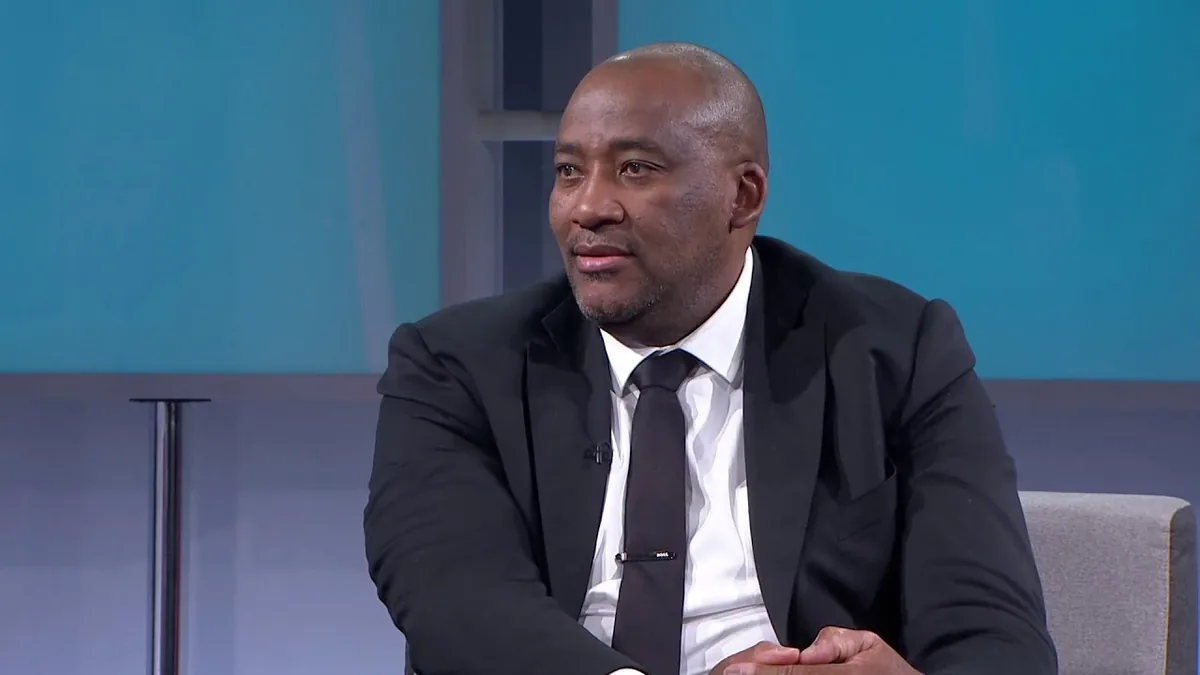
Mosima Gabriel “Tokyo” Sexwale is one of the most compelling and multi-dimensional figures in post-apartheid South Africa — a former Robben Island prisoner, Gauteng’s first post-apartheid premier, a cabinet minister, a mining billionaire, a reality television host, a failed FIFA presidential candidate, and now, at 73, the subject of a KwaZulu-Natal lobby group’s push to make him the ANC’s next president. Few South African public figures have lived as many lives in one career.
Born on 5 March 1953 in Orlando West, Soweto, Sexwale earned his nickname “Tokyo” from his youthful passion for karate — not from any connection to the Japanese capital. He joined the anti-apartheid struggle as a teenager, spent 13 years imprisoned on Robben Island alongside Nelson Mandela, and emerged in 1990 to become one of the ANC’s most significant post-apartheid leaders before leaving frontline politics in 1998 to build one of South Africa’s most aggressive Black Economic Empowerment (BEE) business empires.
His estimated net worth of approximately R2.5–R3.3 billion (roughly $135M–$180M USD) places him among the wealthiest former politicians in South Africa and on the continent — second only to Cyril Ramaphosa in the rankings of South Africa’s richest politicians. That fortune was built through his Mvelaphanda Group, which at its peak held stakes in some of South Africa’s most valuable mining houses, including Gold Fields, Northam Platinum, Trans Hex, and Absa, while simultaneously pursuing diamond concessions across Africa and Russia. The story of how a Soweto-born activist went from an 18-year prison sentence to a multi-billion-rand business empire is one of the defining narratives of post-apartheid South Africa.
“Tokyo Sexwale is the clearest example in South African public life of a liberation hero who made the full transition — from prison cell to premier’s office to the boardrooms of the country’s most powerful mining houses.”
Tokyo Sexwale Net Worth 2026 — The Full Breakdown
Estimates of Tokyo Sexwale’s net worth range from approximately R2.14 billion (BuzzSouthAfrica) to R3.27 billion (Briefly.co.za), with the variation reflecting the difficulty of valuing a portfolio that includes private diamond and oil concessions, unlisted holdings, and assets spread across multiple African countries and Russia. At current exchange rates (approximately R18.47 to the dollar), the R2.5–R3.3 billion range equates to roughly $135M–$180M USD. He is comfortably a billionaire in rand terms and among the wealthiest individuals in South Africa — though his fortune is significantly smaller than Cyril Ramaphosa’s estimated R8.3 billion.
| Wealth Source | Est. Contribution | Notes |
|---|---|---|
| Mvelaphanda Holdings (residual value) | R1.5–R2B+ | Holdings have been substantially wound down since 2009; residual stakes and cash remain |
| Diamond & oil concessions (Africa & Russia) | Est. R500M–R1B | Private concessions difficult to value; Angola diamond origin story well-documented |
| Property portfolio | R200–R400M | Franschhoek, Illovo (Johannesburg), Clifton (Cape Town), Mozambique island, North West game farm |
| African Global Capital & other investments | Est. private | African resource investment vehicle co-founded with Palladino Holdings and Och-Ziff Capital |
| Accumulated salary & directorship fees | R100–R200M est. | Premier, Minister, and multiple JSE-listed board roles over three decades |
The group held stakes in Gold Fields, Northam Platinum, Trans Hex, and Absa simultaneously, making it one of the most formidable black-owned mining conglomerates in South African history. For the full South African politician wealth picture, see the richest politicians in South Africa rankings.
Early Life — Soweto, Robben Island & the Struggle
Mosima Gabriel Sexwale was born on 5 March 1953 in Orlando West, Soweto — the third of six children of Frank Sexwale, a World War II veteran, and Godlieve Sexwale. He grew up in the politically charged Soweto of the 1950s and 1960s, where the brutality of the apartheid system was an everyday reality. He attended St Martins Primary School in Johannesburg and later Orlando West High School, graduating in 1973. His nickname “Tokyo” has nothing to do with Japan — it derives from his teenage involvement in karate, a sport he pursued with enough seriousness to earn the name among his peers.
In the late 1960s, Sexwale joined Steve Biko’s Black Consciousness Movement and became a leader in the South African Students’ Movement. In the early 1970s, he joined the ANC’s armed wing, Umkhonto we Sizwe (MK). He went into exile in 1975, undergoing military officers’ training in the Soviet Union, where he specialised in military engineering. While in exile he also completed a Certificate in Business Studies at the University of Botswana, Lesotho and Swaziland. In 1976, he returned to South Africa and was captured along with eleven others following a skirmish with security forces.
After a two-year trial in the Supreme Court in Pretoria, Sexwale was convicted of terrorism and conspiracy to overthrow the government and sentenced to 18 years in prison. In 1977, he was sent to Robben Island maximum-security prison — the same island where Nelson Mandela was imprisoned. He would spend 13 years there. During his imprisonment, he studied for a BCom degree at the University of South Africa (UNISA), completing his studies behind bars. He was released in June 1990 under the terms of the Groote Schuur Agreement between the National Party government and the ANC.
Political Career — Gauteng Premier & Cabinet Minister
After his release, Sexwale returned to Johannesburg and quickly moved up through the ANC’s ranks. He served as head of the ANC’s public liaison department, then as head of special projects reporting to the ANC’s military headquarters. In September 1990, he was elected to the executive committee of the ANC in the Pretoria-Witwatersrand-Vereeniging (PWV) region, becoming its chairperson in 1991.
Following the landmark April 1994 general election — South Africa’s first fully democratic vote — Sexwale was elected Premier of the new PWV Province, renamed Gauteng Province in December 1994. He was Gauteng’s first post-apartheid premier, overseeing the country’s economic heartland, which contributes approximately 45% of South Africa’s GDP. He was credited with bringing peace to several politically volatile townships during a turbulent transitional period. He left the premiership on 19 January 1998 — reportedly frustrated by central government restrictions, exhausted by ANC internal politics, and recognising that the path to the national presidency was narrowing as Thabo Mbeki emerged as the frontrunner to succeed Mandela. With the top prize receding, Sexwale and Cyril Ramaphosa both made the same calculation: leave politics and build businesses.
Sexwale returned to frontline politics in 2009 when President Jacob Zuma appointed him as Minister of Human Settlements — a ministry which replaced the former Department of Housing. He held the position until 2013, overseeing a significant affordable housing programme, though his tenure was sometimes criticised for prioritising media visibility over delivery. He stood for ANC Deputy President at the 2012 Mangaung conference but received a small fraction of the votes compared to eventual winner Cyril Ramaphosa. He was elected to the ANC’s National Executive Committee in December 2007 but has not held a formal ANC leadership role since leaving cabinet in 2014.
The Mvelaphanda Empire — How He Built His Billions
When Sexwale left politics in 1998, he had a Robben Island legacy, an ANC network, and almost no personal capital. What he built in the following decade is one of the most remarkable wealth-creation stories in South African corporate history. The vehicle was Mvelaphanda Holdings — a Venda word meaning “progress” — which he co-founded in 1998 and 1999 alongside lawyer-turned-dealmaker Mark Willcox and businessman Mikki Xayiya. Together, the three built one of the most aggressive BEE conglomerates in South African mining.
The foundation was diamonds. Sexwale has said he struck it almost immediately after entering the diamond business in Angola, hitting a substantial diamond layer with his earliest operation. In 1997, before Mvelaphanda Holdings was formally established, Sexwale and Sivule Xayiya co-founded Mvelaphanda Diamonds — the precursor structure to everything that followed. Through relationships with French oil and diamond tycoon Jean-Yves Ollivier and networks across Francophone Africa, early diamond opportunities materialised rapidly.
From diamonds, the group pivoted to building positions in South Africa’s largest mining houses, taking full advantage of the Mineral and Petroleum Resources Development Act and its Mining Charter, which required mining companies to sell 26% of their equity to BEE partners. The deals that followed were among the largest empowerment transactions in South African history:
| Company | Stake / Role | Sector |
|---|---|---|
| Trans Hex Group | ~24.5% stake; Chairman from 2000 | Diamond mining |
| Gold Fields (SA Operations) | 15% stake (Driefontein, Kloof, Beatrix mines) — R4.1B deal in 2003 | Gold mining |
| Northam Platinum | ~23% stake; Chairman | Platinum mining |
| Absa Group | Stake via Batho Bonke BEE vehicle; sold 2012 for ~R265M | Banking |
| Life Healthcare, Afrox, Group Five, Swissport | Various minority stakes via Mvelaphanda Group | Healthcare / Industrial / Aviation |
Mvelaphanda Resources was formally listed in 2004, with revenues of $224 million in 2003 alone. The group began winding down these positions from 2009 onwards when Sexwale re-entered politics, selling its stakes and unbundling assets. Mvelaphanda Resources was sold to Northam Platinum in 2010. The group was renamed New Bond Capital and continued as an investment vehicle. What remained — along with the proceeds from asset sales — forms the core of Sexwale’s current estimated net worth.
Sexwale also co-founded African Global Capital alongside Palladino Holdings and Och-Ziff Capital Management (now Sculptor Capital) to invest in African natural resources. Och-Ziff later pleaded guilty in a 2016 US federal bribery probe related to African oil concessions, adding retrospective controversy to some of Sexwale’s international business associations.
Life After Politics — Diamonds, Oil & Global Ambitions
Since leaving the cabinet in 2014, Sexwale has pursued a varied private life while maintaining a high public profile. His international reach and political credentials have made him a significant figure in African resource investment and diplomacy. He continues to hold diamond and oil concessions across Africa — including in Angola and Guinea — and Russia, though the details of these interests are not publicly disclosed.
In 2005, Sexwale hosted the South African version of the reality television show The Apprentice — the local adaptation of the format made famous in the US by Donald Trump. The show gave him a national television profile beyond politics and cemented his public persona as a wealthy, dynamic businessman willing to engage with popular culture. It is often misreported as “Celebrity Apprentice” — it was the standard South African version of the franchise.
In 2015, he entered the race to become FIFA President following the suspension of Sepp Blatter amid a global corruption scandal. His candidacy was backed by significant support across African football federations, but he withdrew before the first round of voting when it became clear he lacked the votes to win. The episode added another chapter to a biography that already included Robben Island, the premier’s office, and the top tier of South African mining.
He has received significant international recognition across his career: the Légion d’honneur from France, honorary doctorates from Nottingham Trent University and De Montfort University in the UK, the Order of the Freedom of Havana from Cuba, and the Cross of Valour (Ruby Class) from South Africa. He serves as a trustee of the Nelson Mandela Foundation, the Global Philanthropists Circle of the Synergos Institute, and the Robben Island Ex-Prisoners Trust. He is also an honorary colonel in the South African Air Force and was chancellor of the Vaal University of Technology.
In April 2026, a KwaZulu-Natal ANC lobby group calling itself the “Tokyo/Mvela Perspective” formally put Sexwale’s name into the debate around who should succeed Cyril Ramaphosa as ANC president at the party’s 2027 elective conference. The group circulated a motivation document arguing that the 73-year-old billionaire and Robben Island veteran is the candidate the party needs. Sexwale has not publicly confirmed or denied any presidential ambitions.
Controversies — Heritage Fund, Guinea & More
Sexwale’s career has not been without significant controversy. Two episodes stand out above the others.
The most damaging to his public reputation in recent years was the WSB “Heritage Fund” affair of 2021. In April of that year, Sexwale made explosive public claims — first in a television interview, then in a two-hour press conference — that billions of rands he had helped raise for free education and Covid-19 relief had been stolen from a fund held at the South African Reserve Bank. The fund, known as the “White Spiritual Boy” (WSB) Trust, was supposedly controlled by an unnamed powerful Asian family and Sexwale claimed to be its joint mandate holder. He alleged that Presidents Ramaphosa and Zuma, as well as Finance Minister Tito Mboweni, were aware of the fund and had failed to act when he alerted them to the theft.
The response from authorities was swift and unambiguous. National Treasury and the South African Reserve Bank issued a joint statement concluding that the fund was a sophisticated “419-style” internet scam — the same type of advance-fee fraud that has targeted prominent South Africans and others internationally for years. The SARB confirmed it had no record of the fund’s existence and had advised Sexwale in writing that it was a scam. Finance Minister Mboweni publicly stated that Sexwale had been “duped.” The Hawks confirmed they were investigating the claims but the episode was widely understood as Sexwale having been the victim of fraudsters rather than a whistleblower exposing genuine criminality. Sexwale continued to insist the fund was real and maintained that those dismissing his claims were covering up wrongdoing — a position he has not publicly retracted.
The second major controversy involved his Guinea mining dealings. Sexwale’s collaboration with the Eurasian National Resources Corporation in Guinea, and his partnership with Guinean President Alpha Condé, attracted allegations of irregular deal-making — including claims of funding Condé’s election campaign and payments to his son. Sexwale declined to personally address these allegations. Additionally, his association with Och-Ziff Capital Management — which pleaded guilty in a 2016 US federal probe into African bribery — retrospectively tainted elements of his African Global Capital venture.
Earlier in his career, in 2001, Sexwale was among those accused alongside Cyril Ramaphosa and Mathews Phosa of plotting to depose President Thabo Mbeki. All three were cleared of the allegations, with Nelson Mandela’s support. In 2002, Sexwale was unable to attend Gold Fields’ listing on the New York Stock Exchange because he was erroneously listed on the US global terrorist roster — an absurd legacy of his Robben Island conviction that took until 2008 to legally resolve. Finally, his 2013 divorce from second wife Judy van Vuuren, who alleged physical, verbal, and emotional abuse, generated significant negative coverage.
Personal Life, Family & 2027 ANC Succession Chatter
Tokyo Sexwale has been married three times. His first wife, whose identity has not been publicly confirmed, is the mother of two of his five children. His second marriage, to Judy van Vuuren — a paralegal he met while she was working on behalf of political prisoners on Robben Island — began soon after his 1990 release and ended in divorce proceedings in 2013, finalised in 2014. Judy alleged physical, verbal, mental, and emotional abuse and cruelty. They had two children together: daughter Gabrielle (a photographer) and son Chris (an engineer). Following the breakdown of his second marriage, Sexwale began a relationship with Natacha da Silva, a former model 38 years his junior whom he had met in 2013. Their son Nasima was born in 2016. After nine years together, Sexwale and da Silva married in November 2022.
Sexwale’s lifestyle is unapologetically that of a very wealthy man. His property portfolio includes residences in Illovo (the previously predominantly white Johannesburg suburb he moved into as a symbol of post-apartheid freedom), Franschhoek, and a seaside home in the exclusive Clifton suburb of Cape Town. He also owns a private holiday retreat — an island off the coast of Mozambique — and a game farm in the North West Province. He is known for a fleet of luxury vehicles and an international lifestyle befitting someone with business interests across multiple continents.
As of mid-2026, Sexwale holds no formal government or senior ANC positions, having last held cabinet office in 2014. However, the emergence of a KwaZulu-Natal lobby group formally putting his name into the ANC’s 2027 presidential succession debate has revived public interest in whether the 73-year-old Robben Island veteran might seek one final chapter in frontline politics. Sexwale has neither confirmed nor denied presidential ambitions — but in a political landscape where the ANC is searching for renewal, the billionaire freedom fighter remains a genuinely compelling figure to many in the party.