
Who Was Pravin Gordhan?
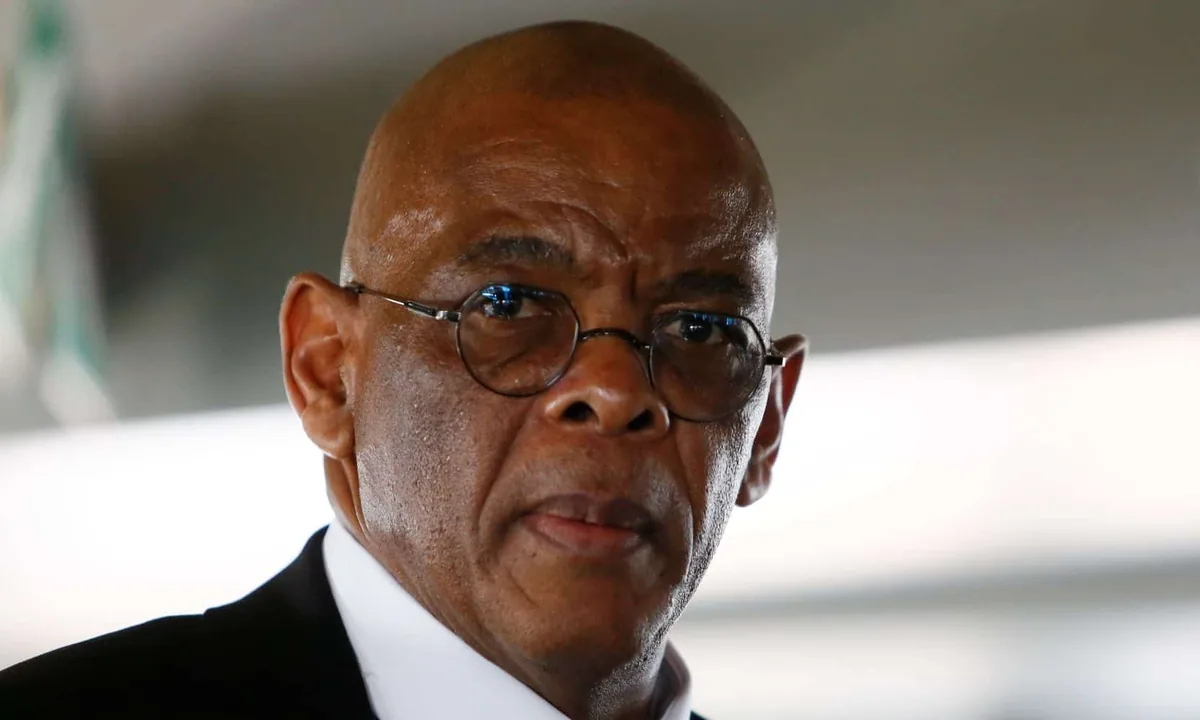
Pravin Jamnadas Gordhan (12 April 1949 – 13 September 2024) was one of the most respected and consequential public servants in South African history — a pharmacist-turned-anti-apartheid activist-turned-fiscal guardian who served his country in high office for more than three decades. He is best known internationally as South Africa’s twice-serving Finance Minister, and domestically as the man who stood most visibly against the state capture project of the Jacob Zuma era. He died at the age of 75 from cancer, just months after retiring from government following the 2024 national elections.
His estimated net worth of approximately $30–35 million (≈ R555M–R647M) is notable primarily for what it is not: unlike most of the other politicians who appear in the richest politicians in South Africa rankings, Gordhan’s wealth was not built through Black Economic Empowerment transactions, mining rights, or access to government procurement. It reflects a lifetime of senior public service salaries — some of the highest in the South African public sector — supplemented by property investments, pension income, and a small number of legitimate private sector board engagements after his ministerial tenures. He was, by the standards of South African politics, a relatively modest man in financial terms. That modesty was itself a statement.
“His last words to friends and family, conveyed in a family statement, were that he had ‘no regrets, no regrets… We have made our contribution.’ That message encapsulated the man: a life spent entirely in public service, with no apology and no personal fortune to show for it beyond what honest work could generate.”
Net Worth: What Was He Worth & How Was It Built?
Gordhan’s net worth is among the harder figures on the South African political wealth rankings to pin down precisely, because — unlike politicians who generated wealth through traceable BEE transactions — his financial position was built slowly through career income, sensible investing, and property. Published estimates range from approximately $5 million (older, conservative figures citing only declared shares) to $30–35 million (more comprehensive estimates accounting for his full career earnings, property assets, pension, and investments). The $30–35M range from The Southern African Times and multiple biographical sources is the most widely cited credible figure.
He was reported to have owned shares in more than 40 companies across Africa, with a total holding of approximately 46,000 shares — a diversified but individually modest portfolio consistent with someone investing carefully from a professional salary over many years, rather than a single large BEE windfall. He was never a billionaire. He never sought to be one.
| Wealth Source | Details | Character of Income |
|---|---|---|
| Senior government salary (SARS) | SARS Commissioner 1999–2009 — top-tier public sector remuneration | Legitimate / salary-based |
| Finance Minister salary | Two terms: 2009–2014 & Dec 2015–Mar 2017. Cabinet minister pay ≈ R2.5–R3M/yr | Legitimate / salary-based |
| Minister of Public Enterprises | 2018–2024 — final cabinet role under President Ramaphosa | Legitimate / salary-based |
| Property investments | Residential property in Gauteng and KwaZulu-Natal accumulated over decades | Legitimate / investment income |
| Share portfolio (~46,000 shares, 40+ companies) | Diversified holdings across African companies; declared in parliamentary register | Legitimate / investment income |
| Speaking fees & honoraria | Global economic forums, including World Economic Forum Davos; post-ministerial engagements | Legitimate / professional income |
| Government pension | Decades of senior public service generating substantial pension entitlements | Legitimate / pension |
No BEE deal windfalls. No government tender relationships. One of the most financially transparent profiles among South Africa’s top political figures.
Early Life, Education & Anti-Apartheid Activism
Pravin Gordhan was born on 12 April 1949 in Durban to an Indian South African family. His father’s name was Jamnadasbhai Gordhan. He matriculated from Sastri College in 1967 and went on to graduate with a Bachelor of Pharmacy degree from the University of Durban-Westville in 1973. He completed his pharmacy internship at King Edward VIII Hospital in Durban in 1974 and worked there as a pharmacist until 1981 — when the Natal Provincial Administration dismissed him for his political activities while he was in detention.
Gordhan had been deeply involved in anti-apartheid politics since the 1970s, leading and organising student movements and civic structures through the Natal Indian Congress (NIC). When the NIC became an affiliated organisation of the United Democratic Front (UDF) in 1983, Gordhan became a key figure in that broad resistance movement. He was arrested, detained, and subjected to banning orders — the South African government’s tool of choice for restricting the movement and speech of political opponents. He was released from jail in 1982 and received banning orders effective until June 1983.
His transition from activism into formal post-apartheid governance was seamless. He attended the preparatory meeting for the Convention for a Democratic South Africa (CODESA) in 1991 as a joint NIC/Transvaal Indian Congress (TIC) representative, and was appointed to the steering committee responsible for organising CODESA 1 — the landmark multiparty talks that paved the way for South Africa’s first fully democratic elections in 1994. He was elected to Parliament in 1994 and chaired the parliamentary constitutional committee responsible for overseeing the implementation of the new 1996 Constitution. He also completed a DTech in Business Administration from the Free State Central University of Technology in 2009 and accumulated multiple honorary doctorates from UNISA, UCT, Nelson Mandela University, and Henley Business School.
SARS Commissioner: Building a World-Class Institution (1999–2009)
If there is a single period in Gordhan’s career that defined his reputation and proved his institutional capacity, it is his decade as Commissioner of the South African Revenue Service (SARS) — from March 1999 to May 2009. He first joined SARS as Deputy Commissioner in 1998 and was appointed Commissioner in November 1999, succeeding Barry Hore. He also served as Chairman of the World Customs Organization from 2000 to 2006.
When Gordhan took over SARS, it was an institution in its early post-apartheid form — functional but not yet exceptional. Over the following decade, he oversaw its transformation into what became widely regarded as one of the world’s best-run tax authorities. His leadership saw tax revenue collection grow from approximately R180 billion in 1999 to over R500 billion by 2007 — an increase driven not by raising rates but by dramatically expanding the tax base, improving compliance, and investing in technology and human capital. SARS under Gordhan became a model for other developing-world tax administrations and was regularly cited in international benchmarking studies as a best-practice institution.
This period is also significant for understanding Gordhan’s wealth: a decade as the head of one of South Africa’s most important institutions at senior public service salary levels — combined with his earlier years in Parliament — laid the financial foundation for the modest but solid personal wealth he would accumulate over his career. He was earning significantly, saving carefully, and investing conservatively in property and shares. No BEE deal was needed. No government tender relationship enriched him. The work itself was the income.
Finance Minister: Two Terms, One Mission (2009–2017)
On 10 May 2009, newly elected President Jacob Zuma appointed Gordhan as Minister of Finance, succeeding the long-serving Trevor Manuel. It was an appointment that surprised some — Gordhan was a technocrat and institution-builder, not a flashy political figure — but one that would prove prescient as South Africa’s financial governance came under mounting pressure in the years that followed.
His first term as Finance Minister (2009–2014) was characterised by steady fiscal management during a difficult global environment — the aftermath of the 2008 financial crisis — and the consolidation of sound public finance principles at National Treasury. He was replaced by Nhlanhla Nene in May 2014 and moved briefly to the Ministry of Cooperative Governance and Traditional Affairs. Then, in December 2015, Zuma fired Nene in a late-night reshuffle that sent the rand into freefall and triggered a national economic crisis. The appointment of an unknown backbencher, David van Rooyen, lasted only four days. Under massive public and market pressure, Zuma reappointed Gordhan as Finance Minister on 14 December 2015.
Gordhan’s second term (December 2015 – March 2017) was arguably the most consequential and dangerous period of his career. He and his senior Treasury colleagues formed what News24 described as “the last line of defence against complete Zuma-Gupta capture of the state.” He blocked corrupt deals, resisted pressure to place Gupta-linked individuals in key Treasury positions, called on the public to “defend National Treasury and its employees” in a remarkable May 2016 statement, and transformed Treasury into the most transparent of government departments to shore up his defences. He was the target of sustained disinformation campaigns, smear operations, and an effort by the National Prosecuting Authority (under political pressure) to charge him with fraud — charges that were ultimately dropped.
In March 2017, Zuma summarily dismissed Gordhan as Finance Minister, replacing him with Gupta functionary Malusi Gigaba. The dismissal triggered a national outcry, rating downgrades to junk status, and galvanised broad public action against Zuma. It is widely regarded as the moment that accelerated Zuma’s eventual removal from the ANC presidency in December 2017.
Resisting State Capture: The Zuma Years
Gordhan’s role in resisting South Africa’s state capture project — the systematic looting of government institutions and state-owned enterprises for the benefit of Zuma’s network, with the Gupta family at its centre — was the defining chapter of his public life. After his dismissal as Finance Minister in 2017, he returned to Parliament as an ordinary MP and led a parliamentary inquiry into Eskom, exposing the scale of mismanagement and capture at the country’s power utility.
He was a regular witness at the Zondo Commission of Inquiry into State Capture, South Africa’s landmark judicial process that documented in forensic detail the looting of state institutions during the Zuma presidency (2009–2018). His testimony was central to understanding how Treasury had been targeted and how the resistance within that institution had functioned. His deep knowledge of financial flows and tender processes — accumulated over a decade running SARS — made him a uniquely effective witness and an extremely dangerous opponent for those who had enriched themselves through state institutions.
The attacks on him during this period were intense and sustained. The EFF’s Julius Malema and Floyd Shivambu were among his most vocal critics, regularly directing personal attacks at him — attacks that, given Gordhan’s actual financial transparency compared to other political figures, often appeared motivated by factors other than a genuine concern about corruption. He was the target of a controversial investigation by former Public Protector Busisiwe Mkhwebane — who was ultimately removed from office — and he faced repeated attempts to cast his leadership of SARS’s so-called “rogue unit” investigation as evidence of personal wrongdoing. All such charges were ultimately withdrawn or dismissed.
“During his second tenure as finance minister, Gordhan sought to limit the rampant corruption that had become brazen and pervasive, bringing him into direct conflict with Zuma and his network. He stopped a corrupt deal advocated by SAA board chairperson Dudu Myeni, a close Zuma confidant. He also looked to limit the influence of the Guptas at parastatals, and started investigating unfolding events at Eskom, Transnet, Prasa and other state-owned enterprises.” — News24
Minister of Public Enterprises: A Difficult Final Chapter (2018–2024)
When President Cyril Ramaphosa came to power in February 2018, he appointed Gordhan as Minister of Public Enterprises — a role that placed him in charge of government’s shareholder oversight of Eskom, Transnet, South African Airways (SAA), Denel, Alexkor, Prasa, and South African Forestry Company Limited (SAFCOL). The mandate was clear: rescue institutions that had been devastated by years of state capture and mismanagement.
It proved to be his most difficult and, by most assessments, least successful posting. Eskom lurched from crisis to crisis under his watch, with load-shedding escalating to Stage 6 by 2022, its debt exceeding R400 billion, and a continuing reliance on expensive diesel-powered emergency generation. Gordhan’s efforts to advance the unbundling of Eskom into separate generation, transmission, and distribution entities — a structural reform he believed essential for long-term electricity stability — progressed too slowly to prevent the crisis from deepening. A notable milestone was achieved in April 2024 with the operational clearance of the National Transmission Company of South Africa, but it came very late.
His attempts to privatise SAA were widely considered a failure. A proposed 51% stake sale to the Takatso Consortium, announced in 2021, collapsed in March 2024 after years of failed negotiations. Parliament’s portfolio committee referred the matter to the Special Investigative Unit, and critics argued that the attempted sale at a nominal price undervalued the airline. Gordhan was accused of orchestrating the proposed sale in an irregular manner — the strongest direct controversy of his final ministerial term.
He retired from government before the May 2024 elections, when the Department of Public Enterprises was formally abolished following the formation of the Government of National Unity (GNU). He was admitted to hospital on 10 September 2024, and died three days later on 13 September 2024. He was survived by his wife Vanitha Raju, and daughters Anisha and Priyesha.
Gordhan’s Legacy & Passing
Pravin Gordhan’s legacy is, above all, an institutional one. The SARS he built became the blueprint for an efficient, technology-led, corruption-resistant tax authority. The Treasury he defended during the Zuma years remained largely intact despite an extraordinary assault on it. His willingness to stand publicly against state capture — at real personal and professional risk — is rare in any political environment, let alone one as complex and pressured as South Africa’s ANC-dominated politics of the 2010s.
His wealth, modest by the standards of the politicians around him, is itself part of the legacy. He accumulated approximately $30–35 million over a lifetime of senior public service — roughly equivalent to what some of his contemporaries made from a single BEE transaction. That disparity is not an accident or an oversight. It reflects a man who could have positioned himself for greater personal enrichment and chose instead the harder path of public accountability. The SARS statement on his death captured it well: “The contribution of Pravin Gordhan may never be truly understood and appreciated by millions of South Africans.”
He holds multiple honorary doctorates from UNISA, the University of Cape Town, Nelson Mandela University, and Henley Business School (University of Reading, UK) — the last of which was the first honorary Doctorate in Business Administration ever awarded to a South African recipient, given specifically in recognition of his public advocacy against state capture.
South Africa lost in Gordhan not just a finance minister but a rare archetype: a public official whose personal wealth grew in proportion to his professional contribution, rather than in inverse proportion to his integrity. He was 75 years old. He had no regrets.
Where He Ranked Among SA’s Wealthiest Politicians
Among the top 10 richest politicians in South Africa, Gordhan ranked third — a position that is more a reflection of the low ceiling of his wealth compared to BEE-enriched peers than of any great personal fortune. The contrast with the names above and below him on that list is striking.
| Rank | Politician | Est. Net Worth | Primary Wealth Source |
|---|---|---|---|
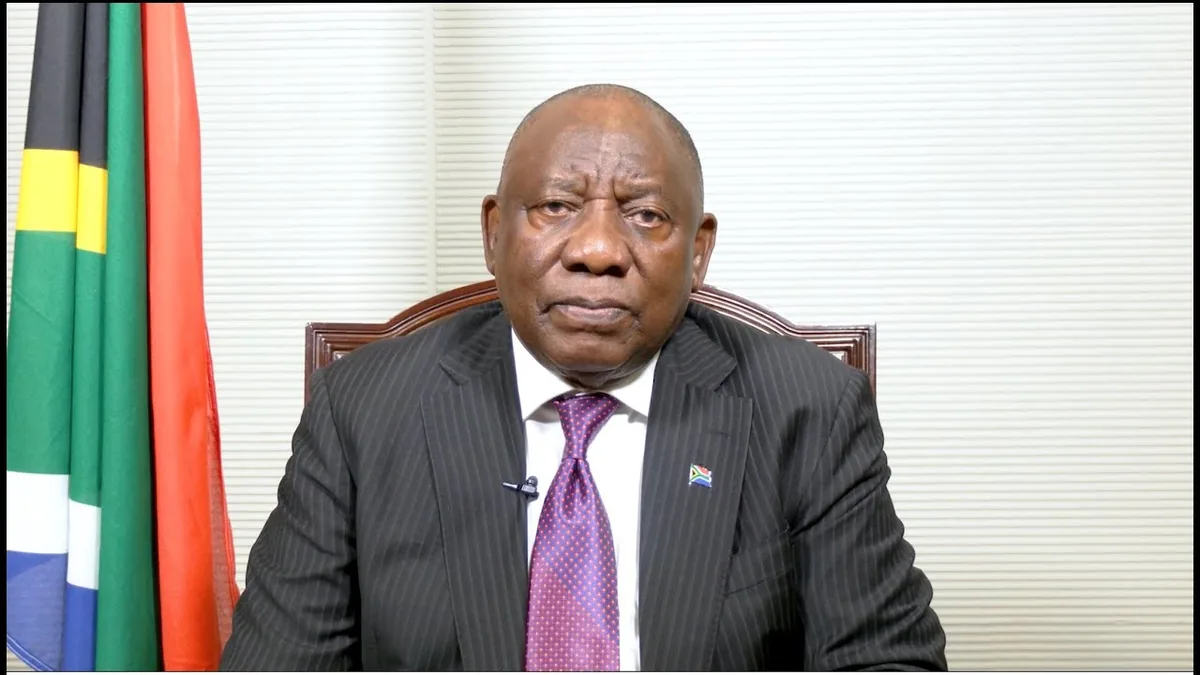
| #1 | Cyril Ramaphosa | ~$450M | Shanduka Group / BEE |
| #2 | Tokyo Sexwale | ~$200M | Mvelaphanda / Mining / BEE |
| #3 | Pravin Gordhan ✦ | ~$30–35M | Salary / property / shares |
| #4 | Julius Malema | ~$30M | Contested / On-Point Engineering |
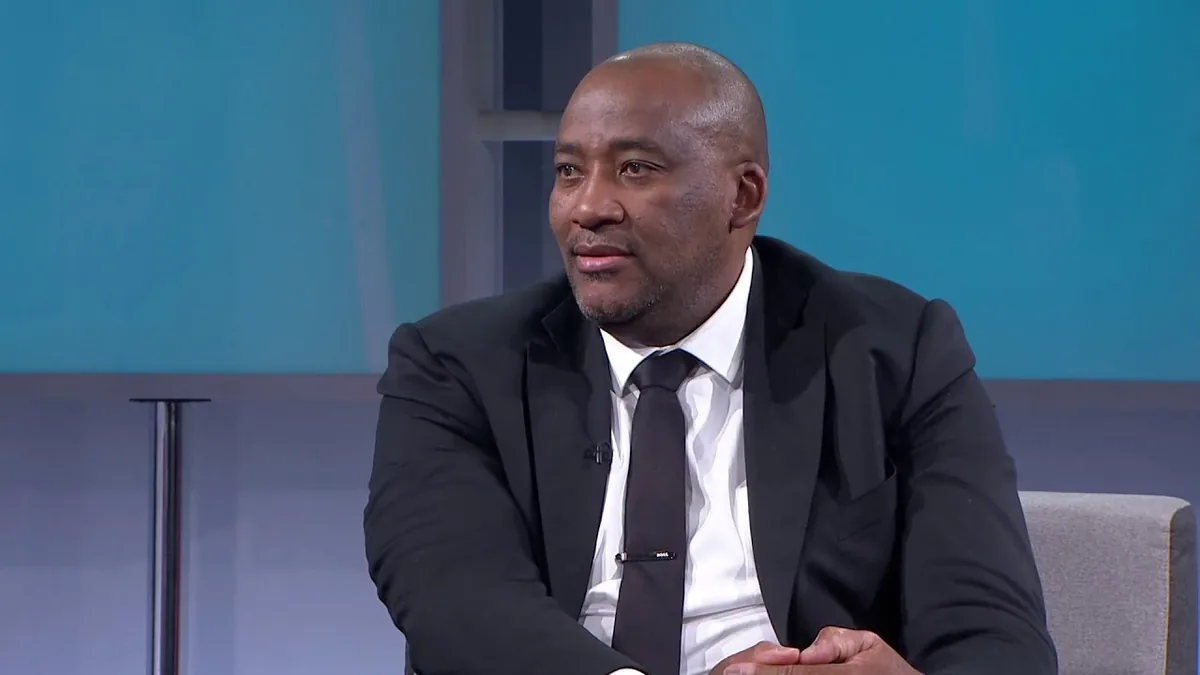
| #5 | Gwede Mantashe | ~$25M | Mining interests / union pensions |
✦ Gordhan’s position reflects his financial position at the time of his passing in September 2024.
The gap between Gordhan at #3 and Ramaphosa at #1 — approximately $415 million — is as revealing a data point as any in South African political wealth analysis. For the full rankings and profiles of all ten politicians, visit our complete guide: Top 10 Richest Politicians in South Africa 2026. You can also browse more South African political wealth profiles in our politicians category.