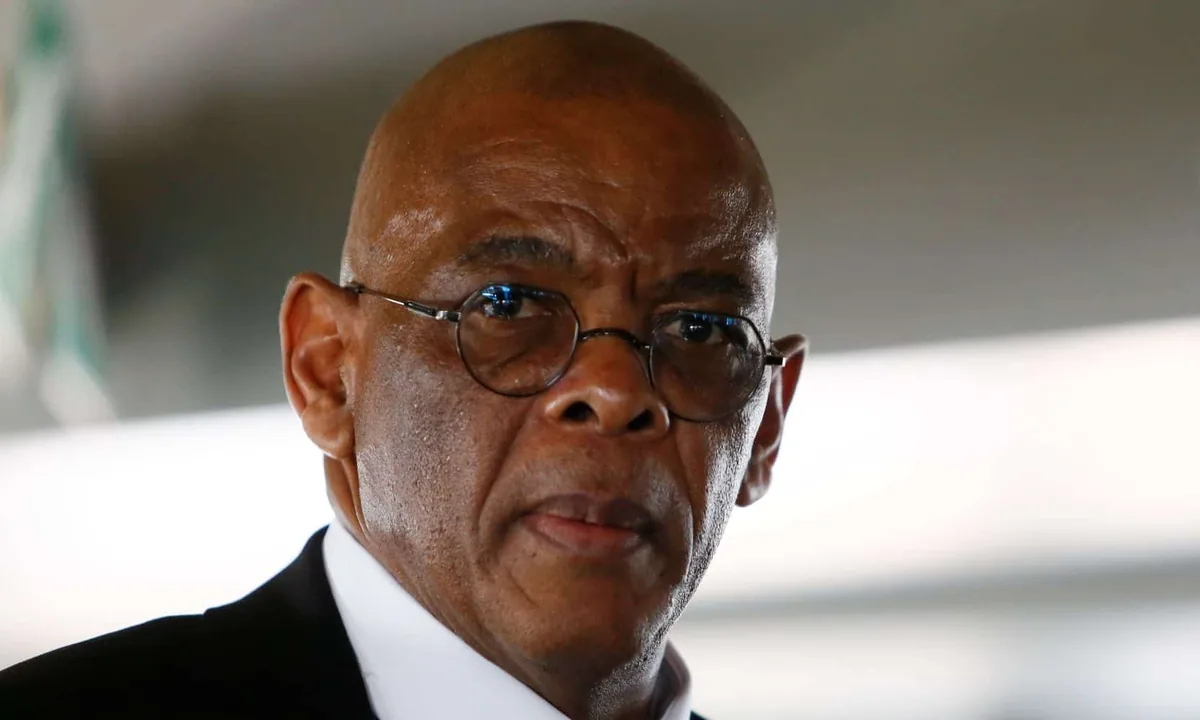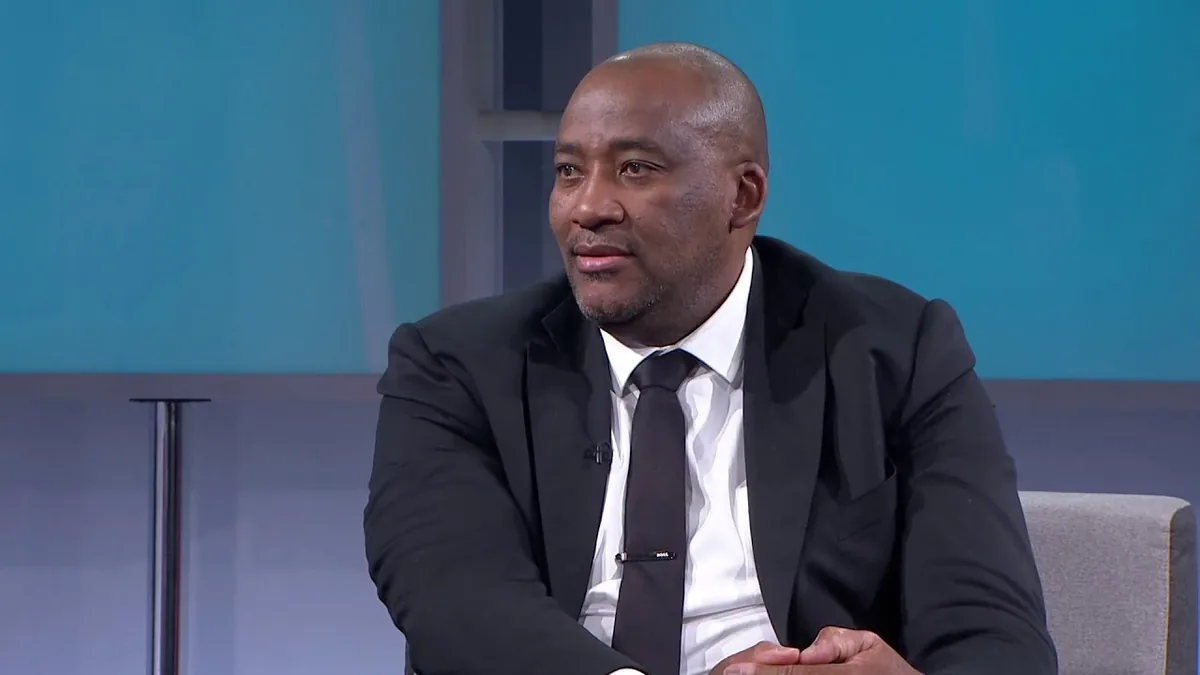
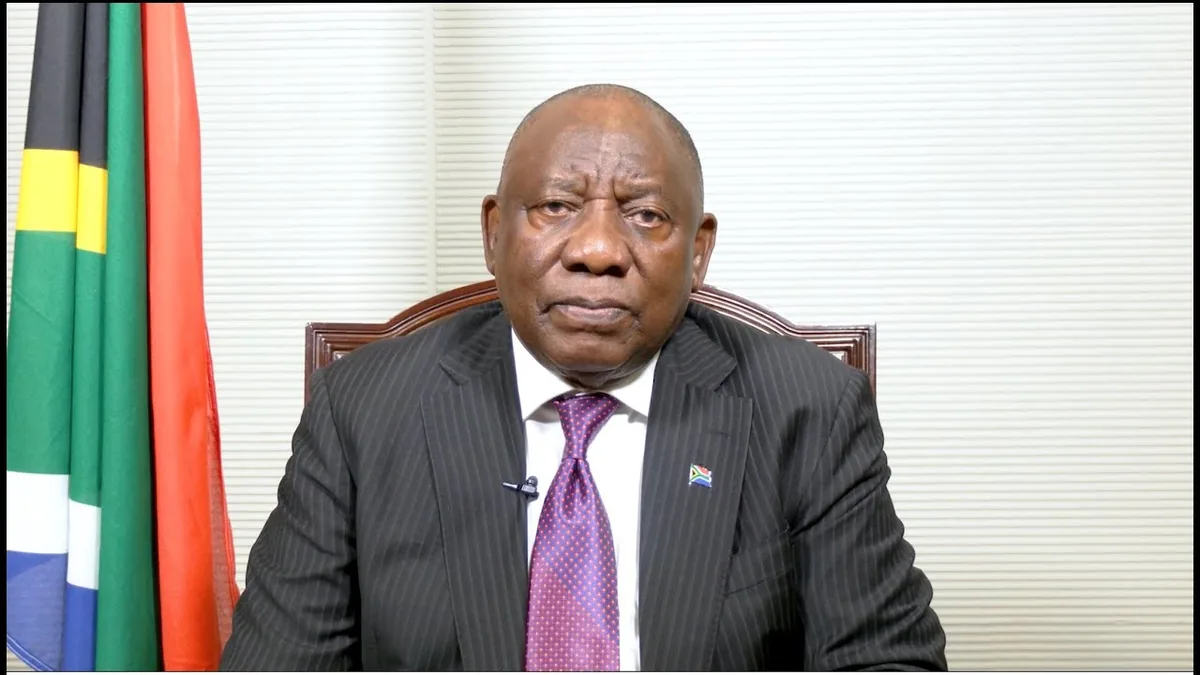
Who Is Cyril Ramaphosa?
Matamela Cyril Ramaphosa was born on 17 November 1952 in Soweto, Johannesburg, the second of three children of Venda parents Samuel and Erdmuth Ramaphosa. He attended Tshilidzi Primary School, Sekano Ntoane High School in Soweto, and later Mphaphuli High School in Sibasa, Venda, where he was elected head of the Student Christian Movement. He went on to study law at the University of the North (now the University of Limpopo) in 1972, where his involvement in student politics ignited a lifelong commitment to activism.
Ramaphosa is South Africa’s fifth democratically elected president, serving since February 2018. He is also the president of the ruling African National Congress (ANC). Before returning to politics, he spent more than a decade building one of the largest black-owned investment empires in South African corporate history — a period that laid the foundation for a personal fortune estimated at approximately $450 million (≈ R8.3 billion) as of 2026.
His remarkable journey — from anti-apartheid activist and trade union general secretary to boardroom executive to head of state — makes him one of the most complex and consequential figures in modern South African history. He is the richest politician in South Africa by a significant margin. For context on how he compares to other wealthy politicians, see our full guide to the richest politicians in South Africa.
“Ramaphosa arrived at South Africa’s presidency with a background unlike many career politicians, shaped as much by boardrooms as by party meetings. Long before assuming office, he had already established himself as one of the most prominent business figures to emerge from the post-apartheid era.”
Net Worth Breakdown: Where Does the $450M Come From?
Cyril Ramaphosa’s estimated net worth of $450 million (≈ R8.3 billion) in 2026 is drawn from multiple, well-documented sources — the majority of which were accumulated between 1996 and 2014, during his deliberate withdrawal from frontline politics. This figure is cited by Celebrity Net Worth, Wikipedia (sourcing Investing.com’s 2018 estimate), and supported by Sunday Times Rich List data. Some sources place the figure as high as $550 million when unlisted assets are included, but $450M is the most widely cited conservative estimate.
| Wealth Source | Estimated Contribution | Notes |
|---|---|---|
| Shanduka Group sale to Phembani (2015) | $200–300M+ | Net proceeds from the full Shanduka/Phembani merger, per MyBroadband & The Citizen |
| Shanduka equity (CIC stake, 2011) | ~$245M valuation | Chinese Investment Corporation paid $245M for a 25% Shanduka stake in 2011 |
| MTN, Bidvest, Standard Bank stakes | Included in Shanduka | Major corporate shareholdings accumulated via BEE transactions |
| McDonald’s South Africa franchise (2011) | Significant | 20-year master franchise agreement for 145 restaurants; divested on entering cabinet |
| Property portfolio | R76M+ declared (2014) | 30 townhouses in Johannesburg, 2 Cape Town apartments; Phala Phala farm & other properties |
| Livestock & agriculture (Ntaba Nyoni Estates) | R15M+ per auction | Ankole cattle breeding; a 2024 Phala Phala auction generated nearly R15M in sales alone |
| Blind trust assets (Mondly, Puma Sports Cars, trusts) | Undisclosed | Declared in 2017 Members’ register; managed in blind trust since 2018 |
The Ramaphosa family’s Tshivhase Trust was the majority shareholder. The sale netted Ramaphosa an estimated $200–300 million in a single transaction.
Shanduka Group: The Engine of His Fortune
The cornerstone of Cyril Ramaphosa’s wealth is the Shanduka Group, an investment holding company he founded in 2001 after a brief stint at New African Investments Ltd (NAIL), where he served as deputy executive chairman. Shanduka quickly became one of South Africa’s leading black-owned empowerment firms, investing across energy, mining, property, banking, insurance, and telecommunications.
Under Ramaphosa’s executive chairmanship, Shanduka built one of the most impressive BEE portfolios in the country. Its holdings spanned some of South Africa’s most prominent companies:
| Company | Sector | Role / Stake |
|---|---|---|
| MTN Group | Telecommunications | Chairman; BEE equity stake |
| Bidvest Group | Diversified services | Chairman; significant shareholding |
| Standard Bank | Financial services | Non-executive director; stake |
| Coca-Cola Beverages SA | FMCG / Bottling | Equity stake via Shanduka |
| McDonald’s South Africa | Franchising / Retail food | 20-year master franchise, 145 restaurants (acquired 2011) |
| Macsteel Holdings | Steel / Mining | Non-executive director |
| Mondi | Paper & packaging | Chairman from March 2007 |
| SABMiller | Beverages / Brewing | Non-executive director |
| Anglo American | Mining | Non-executive director |
| Alexander Forbes | Financial services | Non-executive director |
| Liberty Group | Insurance | Shanduka portfolio stake |
| Seacom | Telecoms infrastructure | Shanduka portfolio stake |
| Lonmin Platinum | Platinum mining | Non-executive director (see Marikana section) |
A major milestone came in 2011, when the Chinese Investment Corporation (CIC) paid $245 million for a 25% stake in Shanduka Group — an implicit valuation placing the company at approximately $980 million (≈ R7 billion) at the time. By 2014, Shanduka’s portfolio value had grown to exceed R20 billion, making the Ramaphosa family’s Tshivhase Trust — as its majority shareholder — one of the most valuable private trust structures in South Africa.
In June 2015, Shanduka was sold to and merged with Phembani Group, another black-owned investment firm. The transaction netted Ramaphosa an estimated $200–300 million in proceeds, representing the single largest lump-sum realisation of his personal wealth. Phuti Mahanyele served as CEO of Shanduka during its peak years.
BEE Deals & Corporate Directorships
Ramaphosa’s fortune was built during the era of Black Economic Empowerment (BEE) — a landmark post-apartheid policy framework that required or strongly incentivised major South African corporations to transfer significant equity stakes to previously disadvantaged individuals. Ramaphosa, with his liberation movement credentials, trade union relationships, and legal acumen, was ideally positioned to participate in these transactions.
His roots in organised labour were crucial. As founder and first general secretary of the National Union of Mineworkers (NUM) — which he helped establish in the early 1980s and grew into South Africa’s largest union — Ramaphosa built relationships across the mining, energy, and finance sectors that later translated directly into business opportunities. The same network that helped him negotiate the end of apartheid on behalf of the ANC in the early 1990s also opened corporate boardroom doors during the BEE era.
His 2017 declaration in Parliament’s Register of Members’ Interests listed more than R76 million in declared company shares — and that figure explicitly excluded shares held in conjunction with private individuals and through the Tshivhase family trust structure. His remaining declared holdings at that point included Ntaba Nyoni Estates, Ntaba Nyoni Feedlot, Mondly Ltd, and Puma Sports Cars, alongside several residential properties and deferred beneficiary interests in three family trusts.
It is important to note that all these transactions were entirely legal — they were the intended mechanism of BEE policy. The debate around their legacy is a political and economic one (did they broaden wealth or merely enrich a small elite?), not a legal one. Ramaphosa has never been convicted of or charged with any offence relating to his business dealings.
Properties, Farms & Other Assets
Beyond his investment portfolio, Ramaphosa owns an extensive portfolio of physical assets across South Africa. At the time of his 2014 Members of Parliament register disclosure, he owned 30 townhouses in Johannesburg and two apartments in Cape Town. He also owns a luxury mansion at the foot of Lion’s Head in Cape Town — one of the most sought-after addresses in the country.
His most commercially notable physical asset is Phala Phala Wildlife, a large game farm in Limpopo province that operates as a commercial enterprise. The farm is home to his famous Ankole cattle breeding programme — a passion project that began in 2004 when, during a visit to Uganda, Ramaphosa became interested in the distinctive long-horned Ankole breed. Because South Africa’s disease control regulations initially prevented importation, he arranged for 43 cows purchased from Ugandan President Yoweri Museveni to be shipped to Kenya, where embryos were extracted and transferred to quarantined South African cows.
The Ankole breeding business, operated through Ntaba Nyoni Estates, has become a significant revenue generator. A single auction at Phala Phala in 2024 generated nearly R15 million in sales, while individual Ankole bulls have sold for millions of rands at auction. His cattle business also includes Ntaba Nyoni Feedlot. Other assets listed in his parliamentary declarations include Mondly Ltd and Puma Sports Cars — a dealership interest.
Presidential Salary vs. His Actual Wealth
Ramaphosa’s presidential salary is approximately R4.2 million per year (≈ $227,000 at current exchange rates) — a figure he has on multiple occasions announced he would donate to charity. While this is well above the South African median income, it represents a fraction of a fraction of his personal net worth. If his fortune is $450 million and his salary is $227,000, his annual salary represents roughly 0.05% of his total wealth.
This is the crucial distinction that makes Ramaphosa unusual among world leaders: he was not made rich by public office. He was already one of South Africa’s wealthiest individuals before returning to active politics in 2012. His political salary is, in practical terms, irrelevant to his financial position. The wealth came from the boardroom, not the Union Buildings.
Since becoming Deputy President in 2014 and President in 2018, Ramaphosa has been required to comply with the Executive Ethics Code, which meant divesting from active business management. His remaining assets — the farms, properties, trust interests, and remaining investments — are managed through a blind trust, meaning he is not meant to have day-to-day control over or knowledge of their management. This arrangement is designed to prevent conflicts of interest between his business holdings and his responsibilities as head of state.
The Phala Phala Scandal Explained
In June 2022, the Phala Phala scandal — also referred to as “Farmgate” — thrust the scale of Ramaphosa’s personal wealth into sharp public focus. Former State Security Agency head and Zuma ally Arthur Fraser filed a complaint alleging that on 9 February 2020, a large sum of US dollars was stolen from Ramaphosa’s Phala Phala game farm in Limpopo, and that Ramaphosa had covered up the theft and bribed the suspects into silence.
The amount of cash alleged to have been concealed in a couch at the farm varied by source: Fraser alleged more than $4 million; Ramaphosa put the figure at $580,000. He said the money represented proceeds from the legitimate commercial sale of game animals, and that he had reported the theft once made aware of it. He denied any wrongdoing or cover-up.
A parliamentary panel found that Ramaphosa may have violated the Constitution, and a motion of no confidence was tabled. The National Assembly voted 148 for and 214 against impeachment on 13 December 2022, and Ramaphosa survived. In October 2024, the National Prosecuting Authority (NPA) confirmed it would not prosecute Ramaphosa or any of the suspects involved in the case. The South African Reserve Bank also cleared him of allegations that he had contravened exchange control regulations.
The episode is relevant to his net worth profile primarily because it drew wide public attention to the commercial scale of Phala Phala — a farm large enough to generate hundreds of thousands of dollars in a single game sale, and to store that cash on the premises — and reinforced the picture of a president with personal assets far beyond what his political salary could explain.
Marikana & Lonmin: The Ongoing Controversy
Ramaphosa’s business career is not without serious controversy. The most significant is his role in the events surrounding the Marikana massacre of 16 August 2012, in which 34 striking mineworkers at Lonmin Platinum’s Marikana mine were shot and killed by South African Police Service officers — the deadliest use of state force against South African civilians since the apartheid era.
At the time, Ramaphosa held a non-executive directorship at Lonmin through Shanduka Group, which had a stake in the platinum producer. In the days preceding the massacre, a series of emails emerged in which Ramaphosa wrote to the Mineral Resources Minister and Lonmin management describing the mineworkers’ strike as “criminal” and calling for “concomitant action” by police. Critics argued that this language contributed to framing the police response as dealing with criminals rather than striking workers.
The subsequent Farlam Commission of Inquiry found that Ramaphosa bore no criminal responsibility for the massacre. He has consistently maintained that his communication was aimed at urging police to act lawfully, not to shoot workers. The episode became a defining controversy of his 2017 ANC presidential campaign and continues to follow him in political discourse. It is also a reminder that his Lonmin directorship — one of many BEE positions — carried real-world responsibilities and real-world consequences beyond share valuations.
How He Compares: Richest Politicians in South Africa
Ramaphosa does not just top the list of wealthy South African politicians — he sits at an entirely different level from the next wealthiest figures. The gap between him and the number two ranked politician is enormous: Tokyo Sexwale, estimated at around $200M, has less than half his fortune. The gap only widens from there.
| Rank | Politician | Est. Net Worth | Gap vs. Ramaphosa |
|---|---|---|---|
| #1 | Cyril Ramaphosa | ~$450M | — |
| #2 | Tokyo Sexwale | ~$200M | $250M less |
| #3 | Pravin Gordhan | ~$35M | $415M less |
| #4 | Julius Malema | ~$30M | $420M less |
| #5 | Gwede Mantashe | ~$25M | $425M less |
For a comprehensive look at the full rankings, wealth sources, and profiles of all ten politicians, visit our detailed guide: Richest Politicians in South Africa 2026 — Complete Top 10 Rankings.