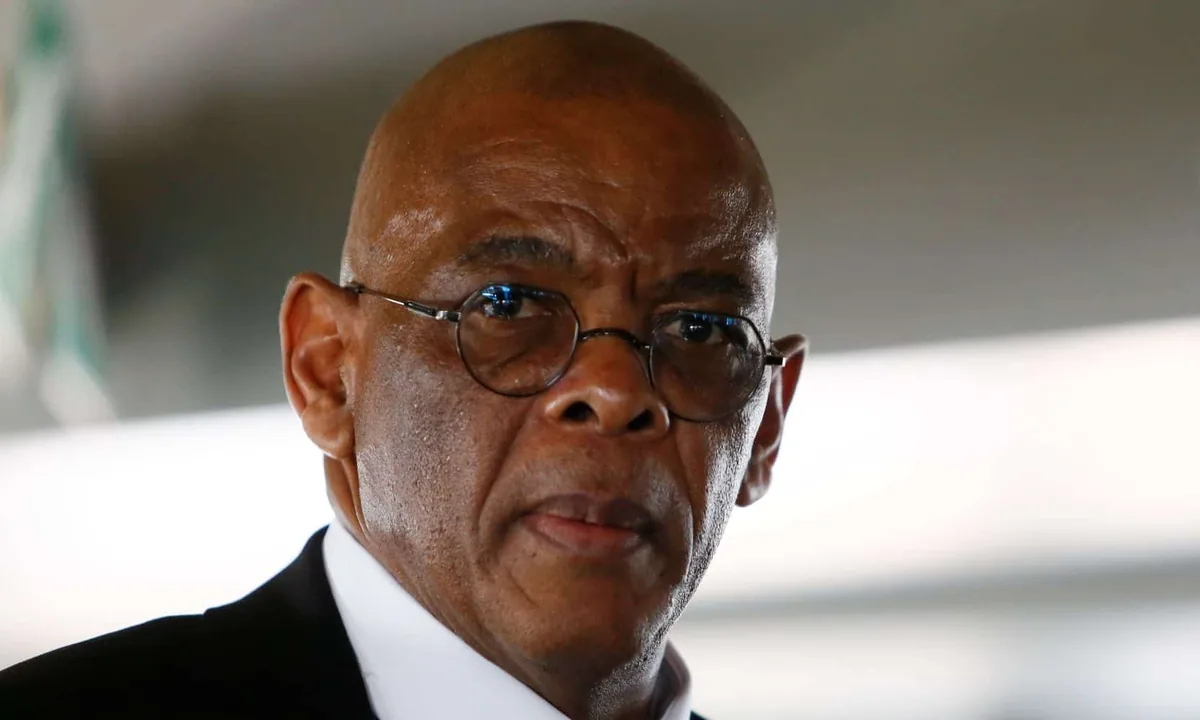

Overview: Who Is Gwede Mantashe?
Samson Gwede Mantashe is one of the most enduring and influential figures in South African politics. Born on 21 June 1955 in the village of Lower Cala in the Eastern Cape, he has spent five decades at the heart of the country’s labour, communist, and ANC political structures. As of May 2026, he serves as the Minister of Mineral and Petroleum Resources in President Cyril Ramaphosa’s Government of National Unity — the role his portfolio was reshaped into after the June 2024 general election — and continues his second term as National Chairperson of the African National Congress.
Unlike some of his ANC contemporaries — whose fortunes were built through landmark BEE equity transactions in the early 2000s — Mantashe’s financial profile is more modest and rooted in a different kind of political career: decades as a trade union organiser, a fulltime ANC administrator, and a cabinet minister. His estimated net worth of approximately R60–R100 million (roughly $3.3M–$5.4M USD) reflects that trajectory: senior salary accumulation over many years, a small equity stake from his union days, property investments, and the pension benefits of a career spanning some of the most consequential chapters in post-apartheid South Africa. He is widely described as living comfortably but without the ostentatious wealth of some of his peers.
In December 2025, Mantashe announced plans to step back from ANC leadership roles, citing his age — a signal that one of the party’s most recognisable voices is preparing to close a chapter that has spanned the Mbeki, Zuma, and Ramaphosa eras. Understanding his wealth requires understanding that career in full: how a mineworker from the Eastern Cape became, in the words of the Mail & Guardian, “the ultimate political traffic warden inside and outside the ANC.”
“Mantashe’s wealth is modest relative to his enormous political influence — a reflection of a career built through unions and party structures rather than the BEE deal-making that created overnight millionaires among his ANC contemporaries.”
Gwede Mantashe Net Worth 2026 — The Full Breakdown
Estimating Gwede Mantashe’s net worth is genuinely difficult. Unlike politicians who became wealthy through publicly disclosed BEE transactions — where share stakes can be tracked — Mantashe’s financial disclosures list categories of assets without valuations, and the sources of his wealth are relatively opaque. Published estimates from credible South African outlets vary considerably, from a conservative floor of around R45–R50 million to a higher-range estimate of approximately R99–R100 million, with a City Press estimate of around R70 million sitting as a widely referenced midpoint.
| Wealth Source | Est. Contribution | Notes |
|---|---|---|
| Accumulated ministerial & ANC salary (career total) | R40–R60M | ~R2.5M/year ministerial salary; decades of senior union and ANC roles |
| Property investments | R10–R20M | Sandton/Johannesburg residence, Eastern Cape holdings |
| Mining BEE stake & consultancy income | R5–R15M | Includes historic Samancor directorship; union investment vehicle (Kopano Ke Matla) |
| Pension & retirement benefits | R10–R20M | Accrued from NUM, COSATU, and public service pension schemes |
| Speaking fees, royalties & other income | Est. minor | Conference appearances, possible book royalties; exact figures private |
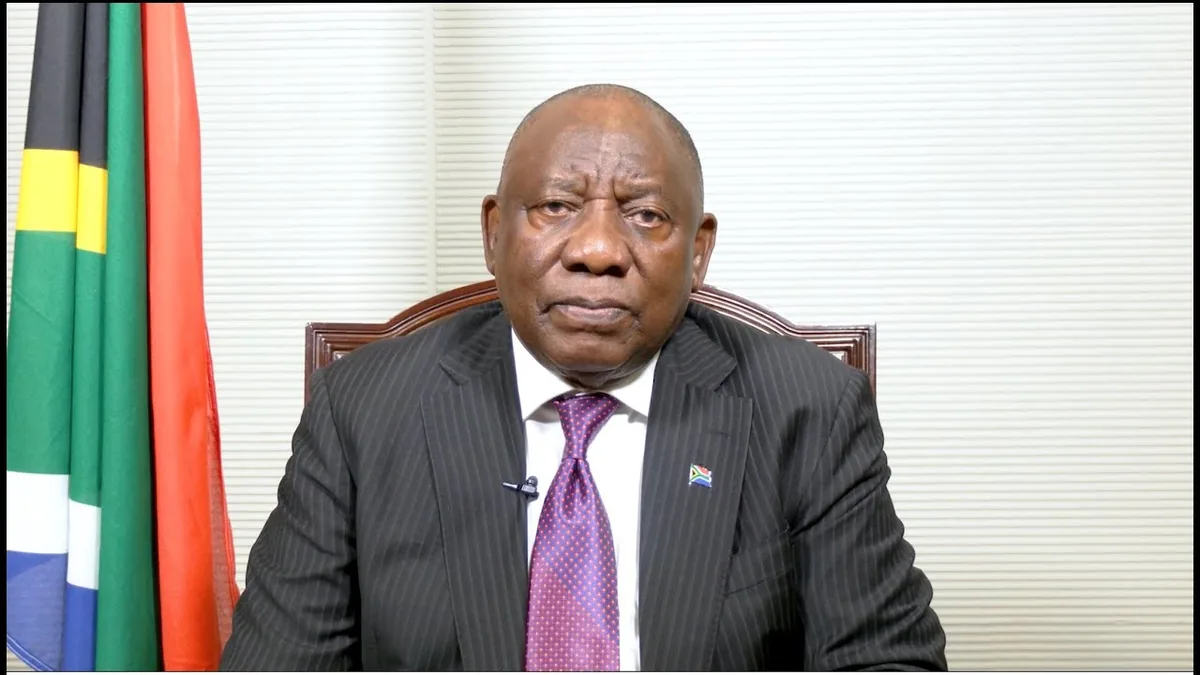
His fortune reflects a career built through trade unions and party structures, not the BEE equity transactions that made contemporaries like Cyril Ramaphosa (~R8.3B) extraordinarily wealthy.
It is worth noting that Mantashe himself has consistently presented his economic identity as aligned with broad-based worker empowerment rather than personal accumulation — a stance rooted in his origins as a mineworker and union organiser. Whether or not that framing fully squares with his actual asset position, the consensus across multiple sources is that his wealth, while significant by South African standards, is modest relative to his political stature. He does not appear on any edition of the Forbes Africa Rich List, and his name does not feature in Sunday Times Rich List coverage of the wealthiest South Africans.
Early Life & Education — From Cala to the Coalfields
Samson Gwede Mantashe was born on 21 June 1955 in Lower Cala, a small village in the Transkei region of what was then the Cape Province — now part of the Eastern Cape. He grew up under apartheid in a working-class Xhosa family, attended Matanzima High School in Cala, and became politically active as a young man through the Student Christian Movement. His classmate Enoch Godongwana — who would later become South Africa’s Finance Minister — recalled that Mantashe was “a noisemaker, even then.”
Economic necessity drove Mantashe into the mining industry after school. He joined the migratory labour force in 1975, working first as a recreation officer at Western Deep Levels, an Anglo American gold mine in Carletonville, Transvaal, and then from 1975 to 1982 as a welfare officer at Prieska Copper Mines in the Cape Province. In 1982, he relocated to Matla Colliery in the Eastern Transvaal — a move that would define the trajectory of his life. It was here that he co-founded the Witbank branch of the National Union of Mineworkers (NUM), a union that had just been established nationally under a young Cyril Ramaphosa.
Mantashe pursued formal education later in life, after the end of apartheid — a testament to his determination. He completed a Bachelor of Commerce degree at the University of South Africa (UNISA) in 1997, followed by an Honours degree in the same field in 2002. He then obtained a Master’s degree in industrial sociology from the University of the Witwatersrand in 2008, and completed a Master of Business Administration (MBA) through the Management College of Southern Africa (MANCOSA) in 2021 — at the age of 66. His academic journey underscores one of the defining features of his public identity: a commitment to intellectual rigour alongside his political work.
The NUM Years — Building Labour Power (1982–2006)
Mantashe’s rise through the National Union of Mineworkers was rapid and driven by clear organisational talent. After co-founding the Witbank branch in 1982 and serving as its chairperson until 1984, he was elected NUM Regional Secretary in 1985. He became the union’s National Organiser from 1988 to 1993, then its Regional Coordinator from 1993 to 1994, before being appointed deputy to Kgalema Motlanthe — then NUM Secretary-General — as Assistant General Secretary from 1994 to 1998. When Motlanthe moved on, Mantashe succeeded him as Secretary-General of the NUM in 1998, a position he held for eight years.
During his NUM years, Mantashe made history in 1995 when he became the first trade unionist ever appointed to the board of a JSE-listed company — Samancor, one of South Africa’s major manganese and chrome producers. This directorship is an important and often underreported element of his financial biography: it gave him early exposure to corporate governance and, in the years following, a small equity stake in the business that forms one component of his estimated net worth. He was also instrumental in founding Kopano Ke Matla, COSATU’s investment arm — demonstrating an early engagement with economic transformation through financial structures rather than just collective bargaining.
When Mantashe left the NUM in May 2006, he briefly worked at the Development Bank of Southern Africa before being elected Secretary-General of the ANC at the party’s 52nd National Conference at Polokwane in December 2007 — one of the most consequential gatherings in the ANC’s post-apartheid history.
ANC Secretary-General — A Decade at Luthuli House (2007–2017)
The ANC Secretary-General is arguably the most operationally powerful full-time role in the party — the person responsible for maintaining the party machinery, enforcing discipline, managing communications, and holding the organisation together between national conferences. Mantashe held this position for a decade, winning re-election at the 53rd National Conference in Mangaung in December 2012, and leaving after two full terms at the 54th National Conference in Nasrec in December 2017.
His decade at Luthuli House spanned the most turbulent period in the post-apartheid ANC’s history — the Zuma presidency, the rise of state capture, the Marikana massacre, the recall of Thabo Mbeki, and growing public disillusionment with the party. Mantashe’s role was consistently controversial. His critics argued that as Secretary-General he was a central figure in the ANC’s institutional efforts to protect Jacob Zuma from accountability — pointing, for example, to his 2013 statement that Zuma’s relationship with the Gupta family was “not ANC business” following the notorious Waterkloof Air Force Base landing. He also opposed parliamentary votes of no confidence against Zuma, warning in 2017 that ANC MPs who voted against the president could face party consequences.
At the same time, Mantashe’s defenders note that he was among the ANC leaders who pushed back against Zuma’s most destabilising decisions — particularly the December 2015 firing of Finance Minister Nhlanhla Nene, which Mantashe helped force Zuma to reverse. He also publicly supported Finance Minister Pravin Gordhan when Gordhan faced politically motivated fraud charges in 2016. The Mail & Guardian described him as “cantankerous” and noted that he was notorious among journalists for phoning them personally to dispute their coverage — a quality that made him both feared and respected in Johannesburg’s political press corps.
Cabinet Minister — Minerals, Energy & Petroleum (2018–Present)
Following the 54th National Conference at Nasrec in December 2017 — at which Cyril Ramaphosa narrowly defeated Nkosazana Dlamini-Zuma for the ANC presidency — Mantashe was elected ANC National Chairperson, and President Ramaphosa appointed him to the cabinet as Minister of Mineral Resources in February 2018. His portfolio was expanded in May 2019, when energy was added and he became Minister of Mineral Resources and Energy — placing him in charge of two of the most strategically critical and commercially powerful sectors in the South African economy.
After the June 2024 general election and the formation of the Government of National Unity, his portfolio was restructured. Since July 2024, Mantashe has served as Minister of Mineral and Petroleum Resources, with the energy component of his former department moved elsewhere. In July 2025 he also briefly served as acting Minister of Police following the removal of the previous minister. He was elected to a second term as ANC National Chairperson at the party’s 55th National Conference in December 2022, cementing his position as one of Ramaphosa’s most senior and reliable political allies.
His ministerial tenure has been defined by the energy crisis — South Africa’s catastrophic electricity shortfall — and by deep debates over the country’s energy transition. Mantashe has been a consistent and vocal advocate for a cautious transition away from coal, arguing that rapid decarbonisation would devastate coal-mining communities and undermine energy security. This position has drawn criticism from renewable energy advocates and environmentalists but reflects a constituency — mineworkers and coal-dependent communities — that Mantashe has represented throughout his career. He has also been credited with efforts to modernise the mining licensing system through a new digital Mining Rights Administration System and with revisions to the Mining Charter that eased black ownership rules for exploration companies. In August 2025, he was removed from the SACP Central Committee, though he remains a party member.
Controversies & Scrutiny
Mantashe’s long career has not been without controversy. The most significant incident directly relating to his personal circumstances emerged in 2018, when City Press reported that his properties — including his Eastern Cape farm — had allegedly been placed under surveillance by a private security company with links to the Gupta family. The episode raised uncomfortable questions about his proximity to business interests that were at the time being investigated as part of the broader state capture inquiry. Mantashe has consistently denied any improper relationship with Gupta-linked entities and has not been formally implicated in state capture findings.
There have also been questions about government-funded security upgrades at his private residences, which attracted media investigation and opposition questioning, similar to controversies that have surrounded other senior South African cabinet ministers. The amounts involved were not in the league of the infamous Nkandla scandal, but the allegations contributed to a broader public debate about whether senior politicians use state resources for personal benefit.
More broadly, Mantashe’s role in the Zuma years — as the ANC Secretary-General who maintained institutional cover for a presidency increasingly associated with corruption — has been the most sustained reputational challenge of his career. He told the Zondo Commission that party discipline had required him to prioritise ANC unity during that period. His critics have characterised this as a failure of moral leadership; his supporters argue that he ultimately supported Zuma’s removal by the ANC and had limited personal complicity in state capture.
In May 2026, his comments defending the ANC’s use of its parliamentary majority to protect political allies drew fresh criticism. Political analyst Justice Malala described the remarks as “depressing” and indicative of a retreat from the principled leadership that earlier generations of ANC figures had modelled.
Gwede Mantashe’s Salary in 2026
As a serving cabinet minister, Gwede Mantashe’s salary is governed by the Remuneration of Public Office Bearers Act. South African cabinet ministers earn an annual base salary of approximately R2.4–R2.7 million (roughly R200,000–R225,000 per month), which includes salary, allowances, medical aid, and travel reimbursements. At current exchange rates, this is approximately $130,000–$146,000 USD per year — substantial by South African standards, firmly in the country’s top 1–2% of earners, but a fraction of what senior executives at major South African companies earn.
Some South African sources have cited a figure of R2.8 million per month for Mantashe — this is almost certainly an error or misreading of annual figures, and is not supported by the Remuneration of Public Office Bearers Act schedules or by credible reporting. His monthly salary is in the R200,000–R225,000 range, not R2.8 million.
Prior to his cabinet roles, Mantashe earned a full-time salary as ANC Secretary-General for a decade — a position that is well-remunerated but not publicly disclosed. His years as NUM Secretary-General and in other senior union roles also provided significant income. The cumulative effect of senior-level income over more than three decades — combined with the pension benefits of public service — forms the foundation of his estimated net worth.
“Mantashe’s path to wealth was through decades of honest senior salary accumulation — not the overnight BEE windfalls that transformed some of his ANC contemporaries into multi-millionaires in a matter of years.”
Personal Life, Family & Retirement Plans
Gwede Mantashe is married to Nolwandle Mantashe, a nurse, and they have three children: Buyambo, Mbasa, and Chuma. The family is based in Johannesburg, and Mantashe maintains ties to his home region in the Eastern Cape — a connection that is clearly meaningful to him and that surfaces regularly in his public appearances. He faced a personal loss in January 2021 when his sister Tozama passed away from COVID-19.
Mantashe’s personal style is generally described as direct and unfussy — he often appears in traditional South African attire at formal events, and colleagues and journalists who have covered him consistently describe a man more interested in the substance of political power than in its trappings. He is not associated with the kind of conspicuous wealth — luxury vehicles, overseas holidays, Sandton nightlife — that has become a point of public resentment around some South African politicians.
In December 2025, Mantashe publicly signalled his intention to begin stepping back from ANC top leadership roles, citing his age — he turned 70 in June 2025. The announcement was widely read as the beginning of an end to one of the longest and most consequential careers in post-apartheid South African politics. He has not announced a formal retirement date, and his ministerial role continues. But the signal that he is preparing for a transition was significant, given the degree to which his presence has defined the ANC’s internal organisational culture for more than a decade.