
Who Is K.O?
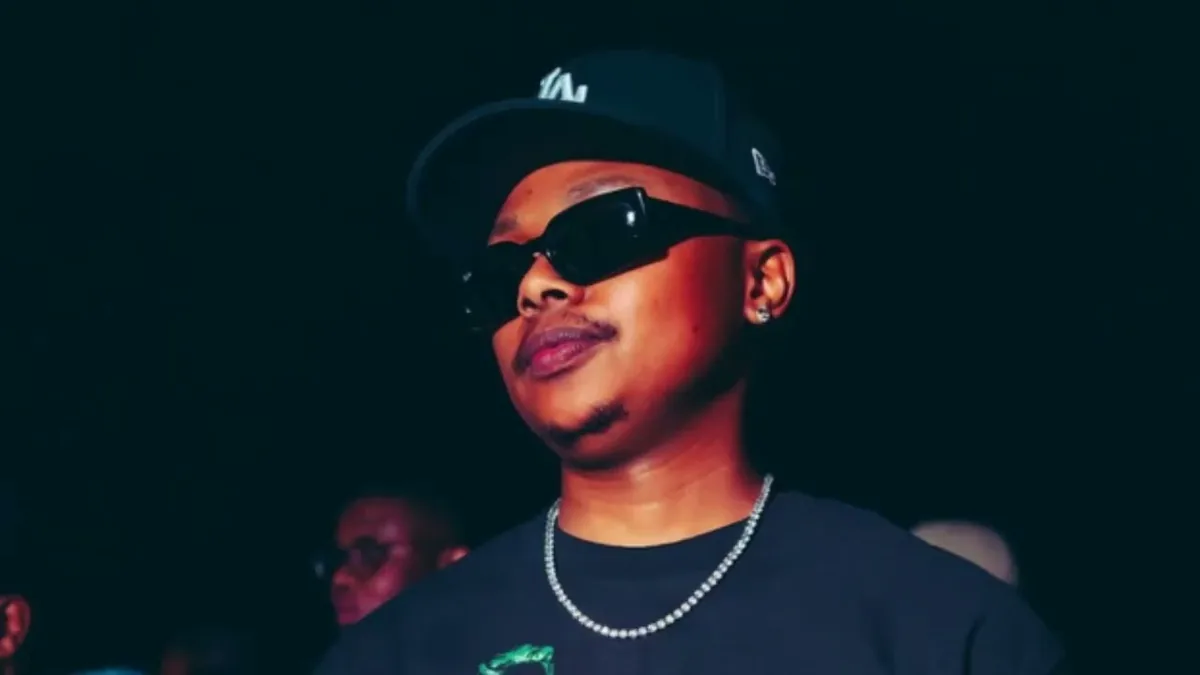
Ntokozo Mdluli — known across South Africa and the African continent as K.O, and nicknamed Mr Cashtime by a fanbase that has never doubted his worth — is one of the most enduring, consistent, and commercially formidable rappers South Africa has ever produced. Born on 13 October 1980 in Piet Retief, Mpumalanga, he grew up navigating the sounds and social textures of Soweto before finding his voice in one of the most celebrated hip-hop groups in SA music history. Over more than two decades, he has released platinum-certified albums, created a record label that shaped careers, produced one of South Africa’s most legendary chart hits, and built a business empire that has compounded quietly and relentlessly while younger artists came and went.
K.O’s career began in earnest when he co-founded the hip-hop group Teargas in 2004 alongside Ma-E and Ntukza while studying for a National Diploma in Public Relations Management at Vaal University of Technology. The group signed with Electromode Music and released four studio albums — K’shubile K’bovu (2006), Wafa Wafa (2008), Dark or Blue (2009), and Num8er Num8er (2012) — that were instrumental in giving South African hip-hop a mainstream presence it had never fully commanded before. When Teargas disbanded in 2012, K.O made a decision that would define the next decade of his career: he co-founded Cashtime Life, a music and entertainment company, and became its first signed artist — meaning he would build his own house and live in it simultaneously.
His solo discography is one of the most impactful in South African music. Skhanda Republic (2014) debuted at number one in South Africa and was certified platinum by RISA. Skhanda Republic 2 (2017), released in partnership with Sony Music Entertainment Africa, extended his commercial footprint. PTY UnLTD (2019) kept the catalogue growing. And then SR3 (2022) arrived — his fourth solo album, also certified platinum, and the source of “SETE,” a single that spent 19 consecutive weeks at number one on the Radio Monitor Charts, making it one of the longest-reigning chart hits in South African radio history. By 2026, his fifth album Phara City signals a man who has never stopped building.
“K.O is not just a rapper — he is a system. Cashtime Life, platinum albums, a Sony deal, chart records that still stand. If you are measuring SA hip-hop’s business acumen, you start with Mr Cashtime.”
By 2026, K.O is 45 years old and operating at the intersection of veteran credibility and genuine contemporary relevance — one of the few artists in South African hip-hop who can claim both. He co-founded Cashtime Life, which launched the careers of Kid X and other artists who became household names in their own right. He studied Public Relations before the music took over, and the discipline of that education is visible in everything from his brand management to his business partnerships. He is, by most informed estimates, one of the wealthiest and most commercially intelligent rappers South Africa has ever produced — a title he has held quietly, without fanfare, for the better part of a decade.
K.O Net Worth in 2026: Updated Figures
K.O’s net worth in 2026 is estimated at approximately $4.8 million USD — roughly R88.7 million ZAR. This figure, cited by Briefly.co.za among other South African celebrity wealth platforms, positions him among the wealthiest South African hip-hop artists of any generation — a significant achievement for an artist who built his entire career through independent label ownership, strategic major distribution partnerships, and a catalogue of platinum-certified work that continues to stream and earn long after each release cycle ends.
Understanding K.O’s net worth requires appreciating the architecture of how he built it. Unlike artists who depend on a single income lever — a major label advance, or a viral moment — K.O’s wealth is the product of twenty years of layered income streams operating simultaneously. Cashtime Life generates revenue as a label. His Sony Music Entertainment Africa partnership gave him global distribution muscle without surrendering the independence that Cashtime Life represents. His streaming catalogue — spanning Teargas albums, four platinum-certified solo projects, and dozens of features — earns passively every month. And his touring income, built on the back of one of the most loyal fanbases in South African hip-hop, remains one of the highest ceilings for single-event earnings among veteran SA artists.
Built through Cashtime Life, two decades of platinum catalogue income, Sony Music partnership, South African and continental touring, and brand partnerships that reflect his premium veteran positioning.
His estimated annual income sits in the range of R8 million to R18 million, driven by streaming royalties from one of the deepest catalogues in South African hip-hop, touring revenue from headline performances across South Africa and the African continent, Cashtime Life label operations, and brand deals that have spanned some of South Africa’s most prominent companies. His net worth growth has been steady, compounding, and built to last:
| Year | Estimated Net Worth (ZAR) | Notes |
|---|---|---|
| 2006–2012 | ~R500K–3 Million | Teargas era; four albums; multiple SAMA nominations; growing touring income |
| 2014 | ~R8–15 Million | Skhanda Republic #1 debut; platinum certification; “Caracara” Record of the Year |
| 2017 | ~R25–35 Million | Skhanda Republic 2; Sony Music deal; Cashtime Life stable growing; “No Feelings” platinum |
| 2019 | ~R40–50 Million | PTY UnLTD; “Supa Dupa” SA hip-hop’s only gold plaque of 2019; catalogue deepening |
| 2022 | ~R60–75 Million | SR3 platinum; “SETE” 19 weeks at #1; fastest SA hip-hop single to go gold |
| 2026 (Current) | ~R88.7 Million | Phara City era; deep streaming catalogue; peak veteran brand value; Cashtime at scale |
Business Empire & Music Ventures
K.O’s commercial footprint is one of the most carefully constructed in South African hip-hop — the product of more than two decades of deliberate business decisions, strategic partnerships, and the discipline that comes from studying Public Relations before the music took over. Here is an honest breakdown of the pillars that drive his empire:
Cashtime Life
Cashtime Life is the commercial engine of K.O’s business empire and the entity through which he has generated the most durable long-term wealth. Co-founded in 2013 alongside Teargas bandmate Ma-E and music marketing executive Thabiso Khati, Cashtime Life began as a music and entertainment company with K.O as its first signed artist. It quickly expanded into a genuine label stable, launching the career of Kid X — who became one of the most beloved rappers in South African hip-hop — along with other artists who found their commercial footing under the Cashtime banner. As a co-founder and operator rather than simply a signed artist, K.O earns from Cashtime Life on both sides of the ledger: as a recording artist generating royalties and as a business principal with ownership interest in the label’s operations and the artists it develops. This dual position is the structural foundation of his wealth.
Sony Music Entertainment Africa Partnership
In July 2017, K.O signed a partnership and distribution deal with Sony Music Entertainment Africa — one of the world’s three major music distribution networks — for the release of Skhanda Republic 2. The Sony partnership gave Cashtime Life and K.O’s music global distribution reach, marketing infrastructure, and the institutional credibility of one of the music industry’s largest gatekeepers, while allowing him to retain the independence of the Cashtime Life brand. This is the ideal arrangement for an artist with strong existing ownership — major distribution power without the label control that typically comes at the cost of catalogue rights. The Sony relationship continued through subsequent releases and remains a key component of how his music reaches international streaming platforms.
Discography: A Platinum Catalogue Built Over Two Decades
K.O’s solo discography is the deepest and most consistently decorated in South African hip-hop outside the very top tier of commercial artists. Skhanda Republic (2014) debuted at number one and was certified platinum — his commercial arrival as a solo force after the Teargas years. Skhanda Republic 2 (2017) cemented his staying power under the Sony banner, producing platinum single “No Feelings.” PTY UnLTD (2019) gave South African hip-hop its only gold-plaque single of the year in “Supa Dupa.” SR3 (2022) was his most commercially explosive solo statement — certified platinum, producing “SETE,” which spent 19 consecutive weeks at number one on the Radio Monitor Charts and became the fastest South African hip-hop single to reach gold certification. His fifth album Phara City, released in 2025, continues the Skhanda Republic narrative and opens a new commercial chapter for one of the format’s most committed architects. This catalogue accumulates streams continuously and generates income that compounds as new fans discover older work.
Teargas: The Group That Built the Foundation
Before Cashtime Life, before the platinum plaques and the Sony deals, there was Teargas — the group that gave K.O his professional foundation, his industry relationships, and his first exposure to what it means to build a South African hip-hop audience from the ground up. Co-founded with brothers Ma-E and Ntukza in 2004, Teargas released four studio albums that are regarded as foundational texts of South African hip-hop’s mainstream era. K’shubile K’bovu (2006), Wafa Wafa (2008), Dark or Blue (2009), and Num8er Num8er (2012) collectively introduced a generation of South Africans to a version of hip-hop that felt local, urgent, and entirely their own. The group’s legacy continues to generate streaming income, and the relationships K.O built during the Teargas years — particularly with Ma-E, who became his Cashtime Life co-founder — have been among the most commercially productive of his career.
Brand Partnerships & Endorsements
K.O’s brand profile is that of a proven, reliable, and culturally credible senior figure in South African hip-hop — a positioning that attracts a different category of brand partner than the youth-market viral deals that dominate younger artists’ endorsement portfolios. He has attracted partnerships with major South African brands over the course of his career, with his MTV Africa Music Award for Best Collaboration — won in partnership with Absolut — representing one of the more high-profile brand associations of his career. His endorsement deals tend to reflect the premium positioning of an artist who has earned his cultural status across twenty years rather than on the back of a single viral moment, making them more durable and arguably more valuable in the long run than fleeting trend-based deals.
Kid X & Artist Development Legacy
One of K.O’s most significant and underappreciated business contributions is his role in the development of Kid X — one of South Africa’s most beloved hip-hop artists of the 2010s — through the Cashtime Life stable. Their 2014 collaboration “Caracara” won Record of the Year and Best Collaboration at the 20th South African Music Awards, becoming one of the most recognised hip-hop records of its era and introducing millions of South African fans to both artists simultaneously. K.O’s ability to develop and elevate other artists through Cashtime Life means that his commercial legacy is not limited to his own catalogue but extends to the careers of artists he helped create — a business outcome with long-term financial and reputational value that compounds independently of his own recording activity.
Rise to SA Hip-Hop Royalty: Timeline
From studying Public Relations in Vanderbijlpark to co-founding a label that shaped a generation and producing one of SA radio’s longest-reigning number one singles — here are the defining moments in K.O’s extraordinary two-decade journey:
Monthly Earnings Breakdown
K.O’s income in 2026 is structured around catalogue depth, label ownership, and the premium live performance rates that twenty years of cultural credibility command. Unlike artists who depend on a single major label advance or a recent viral hit to sustain their income, his earnings are distributed across multiple streams that operate independently of any single release cycle — making his financial position more stable, more durable, and ultimately more valuable than it might appear from headline net worth figures alone. The figures below are estimates based on career scope, platform analytics, industry benchmarks, and available reporting:
| Income Stream | Estimated Monthly (ZAR) | Notes |
|---|---|---|
| Streaming Royalties (All Platforms) | R150,000 – R450,000 | Deep two-decade catalogue; Teargas + solo albums; SA, continental & diaspora streaming |
| SA & Continental Touring | R200,000 – R800,000 | Per show; veteran headliner rates; loyal multi-generational fanbase |
| Cashtime Life Label Revenue | R60,000 – R200,000 | Label operations; artist royalties; catalogue management; co-founder share |
| Brand Partnerships & Endorsements | R150,000 – R800,000 | Per deal; premium cultural credibility over twenty years commands senior rates |
| Merchandise Sales | R40,000 – R120,000 | SA merch; Skhanda Republic brand merchandise; tour-linked drops |
| YouTube Ad Revenue & Digital Content | R50,000 – R150,000 | Catalogue views compounding; SETE and Caracara among most-watched SA hip-hop videos |
| Total Estimated Monthly | R650,000 – R2,520,000 | Variable; peaks during new release cycles and major touring periods |
The critical structural advantage in K.O’s income is its catalogue depth. Every month that passes without a new release is still a month in which SR3, Skhanda Republic, PTY UnLTD, and the entire Teargas catalogue generate streaming royalties across Spotify, Apple Music, Boomplay, and YouTube. For younger artists with three or four years of releases, a quiet month is a lean month. For K.O, with twenty years of catalogue behind him, a quiet month is still a very well-paid one. This is the compounding financial reward of having built for longevity from the very beginning — and it is the reason his net worth continues to grow even between album cycles.
Personal Life, Legacy & Cultural Impact
K.O occupies a position in South African hip-hop that is almost without parallel: he is a founding father of the genre’s modern era who is still actively releasing music, still headlining major shows, and still generating the kind of commercial results — platinum certifications, record-breaking chart runs — that artists half his age struggle to replicate. His longevity is not accidental. It is the product of a deliberate approach to craft, business, and identity that has kept him relevant across three distinct eras of South African hip-hop.
Personal Life in 2026
As of 2026, K.O is 45 years old and based in Johannesburg. He is known for maintaining a relatively private personal life — he lives with his long-term partner, whom he has described as his “homegirl” and the right person to build a future with. In 2023, he spoke openly about his desire to start a family, reflecting a personal chapter that fans who have followed him across two decades find deeply relatable. He has no publicly confirmed children as of 2026, though his expressed desire for family life suggests this may change in the near future. He is known among peers and collaborators for his discipline — a fitness regimen that keeps him physically sharp, a professionalism on stage and in the studio that younger artists frequently cite as a model, and a commitment to his craft that has never wavered across twenty years.
Cultural Impact: The Architect of Skhanda
K.O’s most significant non-financial legacy is what he has done for Skhanda — the sub-genre of South African hip-hop, born from Soweto street culture, that he made his own and built an entire creative universe around. The Skhanda Republic series is not just a collection of albums — it is a world, a mythology, and a cultural framework that gave South African hip-hop one of its most coherent artistic identities. Before the Skhanda Republic, SA hip-hop had stars. After it, it had an architecture. Every artist who has come after K.O and found commercial success by building a defined artistic world around their music has, whether they acknowledge it or not, learned from what he built. Comparably, artists like Nasty C have credited the generation before them — K.O’s generation — with creating the conditions for international crossover to become imaginable.
“SETE staying at number one for 19 weeks is not a fluke. That is a man who has been building his craft for twenty years and finally got the hit that the commercial world had to stop and acknowledge. K.O was always this good.” — South African music industry commentary, 2022. In 2026, that assessment stands unchallenged.
Mentorship & Industry Legacy
K.O’s role as a mentor and career catalyst within the South African hip-hop industry is among his most important contributions. His influence on Kid X — whose career was launched through Cashtime Life — demonstrates a capacity to identify and develop talent that extends his commercial impact well beyond his own output. He was also credited as influential in Kid X’s development as a rapper, and the “Caracara” collaboration remains a defining example of what can happen when two artists operating at the peak of their individual abilities are brought together within a well-structured label environment. The lesson that K.O has offered the South African hip-hop industry through Cashtime Life is that an artist with business acumen can be as powerful a force for the ecosystem as any major label — and considerably more honest about who gets paid.
Philanthropy & Social Engagement
K.O has engaged with social issues throughout his career — from the social commentary embedded in Teargas’s naming and early music, to his personal openness about mental health challenges and his willingness to discuss the pressures of sustained success in a public forum. In 2026, he has publicly discussed the importance of mental wellness for South African artists — a conversation that has become increasingly urgent in the industry in the aftermath of several high-profile artist health crises. While his philanthropic activity has not been formalised into a named institution, his sustained presence as a role model for disciplined, long-term career building — staying healthy, staying professional, staying creative across twenty years — is a form of social contribution to South African artistic culture that no press release can fully capture.