Who Is DJ Tira?
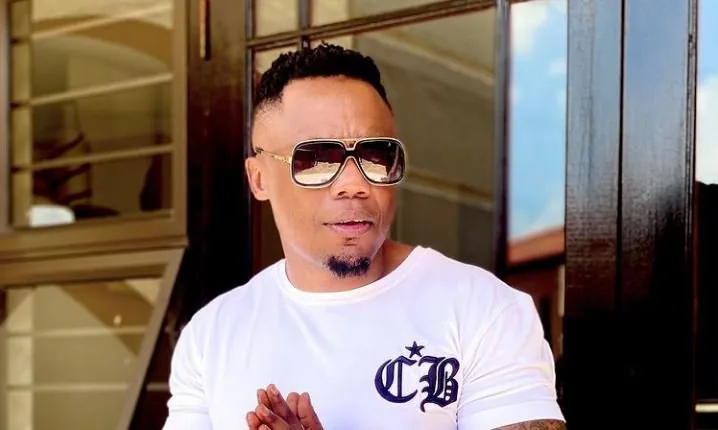
Mthokozi Khathi — known everywhere from the streets of Durban to festival stages across the African continent as DJ Tira — is one of South Africa’s most commercially resilient, culturally indispensable, and entrepreneurially astute figures in the music industry. Born on 24 August 1976 in KwaHlabisa Village, KwaZulu-Natal, he moved to Durban as a young child and grew up immersed in the rhythms that would eventually make him a household name in Mzansi. Over more than two decades, he has built a career that stretches far beyond the decks: he is a record producer, a label founder, an events mogul, and one of the acknowledged pioneers of gqom — the raw, dark, percussive sound born from Durban’s townships that took South African music and eventually the world’s dance floors by storm.
DJ Tira’s career began taking shape during his years at the University of Natal, where he studied Human Resources and simultaneously developed a deep passion for DJing at local events and parties. His talent caught attention quickly, and in 2000 he won the Smirnoff SA DJ Knockout competition — a competition that announced to the industry that a serious new force had arrived. The following year, in 2001, he collaborated with the late DJ Khabzela to release his first compilation record, Real Makoya, laying the commercial foundation for everything that would follow. Over the next few years, he released further compilations and joined Kalawa Jazmee Records, one of South Africa’s most storied kwaito institutions, before striking out independently to build something entirely his own.
That independence took concrete form in 2007 when he launched Afrotainment — a recording studio and independent record label that has since grown into one of South Africa’s most influential full-service entertainment companies. From Afrotainment’s stable emerged Big Nuz, one of Durban kwaito’s most celebrated groups; Babes Wodumo, whose gqom-charged rise to national stardom was engineered under the Afrotainment umbrella; DJ C’ndo, the label’s very first signing; and a succession of artists who have shaped the sound of contemporary South African music. Alongside the label, DJ Tira founded Fact Durban Rocks — an annual entertainment and lifestyle brand that has become one of the most anticipated events in South African music culture, particularly over the festive season in Durban.
“DJ Tira did not just ride the gqom wave — he helped create it. Afrotainment gave Durban’s sound a home, a business structure, and a platform that reached every corner of South Africa and beyond. That is what separates a DJ from a mogul.”
By 2026, DJ Tira is 49 years old and operating at a level that most entertainers never reach: he is simultaneously a working DJ with one of South Africa’s most loyal live fanbases, a label executive whose artists continue to shape mainstream music, and an events entrepreneur whose Fact Durban Rocks brand commands premium sponsorship and sold-out venues year after year. His platinum-certified album 21 Years of DJ Tira (2020) marked two decades of sustained excellence, and his subsequent Rockstar Forever (2021) continued a recording run that has never fully paused. In an industry that routinely discards its veterans, DJ Tira has not merely survived — he has compounded, building layers of business infrastructure that make his wealth and relevance more durable with each passing year.
DJ Tira Net Worth in 2026: Updated Figures
DJ Tira’s net worth in 2026 is estimated at approximately $5 million USD — roughly R92.4 million ZAR. This figure, supported by estimates from sources including Briefly.co.za and industry wealth tracking platforms, positions him among the wealthiest DJs and music entrepreneurs in South Africa — a distinction earned through two and a half decades of recorded music, live performance, label ownership, and the brand equity of Afrotainment and Fact Durban Rocks combined.
Understanding the scale of DJ Tira’s wealth requires appreciating how many separate income levers he has constructed over the course of his career. He is not simply a DJ who earns from bookings. He is a label founder whose artists generate royalties that flow partly back to Afrotainment. He is an events entrepreneur whose Fact Durban Rocks brand commands sponsorship deals, ticket revenue, and branded merchandise income independent of any recording cycle. He is a producer and recording artist with a catalogue of solo albums, compilation series, and thousands of credited productions that earn passively on streaming platforms every month. And he is one of South Africa’s most recognisable entertainment brands — a man whose face, voice, and the famous “Chikichikichaaaaaa” ad-lib are embedded in the cultural memory of a generation of South African music fans.
Built through Afrotainment label operations, Fact Durban Rocks events, two decades of catalogue streaming, South African and continental touring, and brand endorsements that reflect his status as one of Mzansi’s most enduring entertainment figures.
His estimated annual income sits in the range of R10 million to R20 million, driven by Afrotainment label revenue, Fact Durban Rocks event income, streaming royalties across a catalogue spanning over two decades, touring fees as one of South Africa’s most in-demand live acts, and brand partnerships with major South African and international companies. His net worth growth has been steady and compounding:
| Year | Estimated Net Worth (ZAR) | Notes |
|---|---|---|
| 2001–2006 | ~R500K–2 Million | Early DJ career; Smirnoff SA Knockout win; Real Makoya; Kalawa Jazmee era; Durbans Finest compilations |
| 2007–2010 | ~R5–12 Million | Afrotainment founded; Big Nuz signed; Ezase Afro Vol:1 released; Metro FM Best Compilation wins |
| 2012–2015 | ~R20–35 Million | Ezase Afro Vol:2; Fact Durban Rocks brand growing; Afrotainment stable expanding; touring at scale |
| 2017–2019 | ~R40–55 Million | Gqom goes mainstream globally; Babes Wodumo breakthrough; Ikhenani released; Fact Durban Rocks at peak |
| 2020–2021 | ~R60–75 Million | 21 Years of DJ Tira (platinum); Rockstar Forever; Afrotainment at scale; catalogue deepening |
| 2026 (Current) | ~R92.4 Million | Peak Afrotainment empire value; Fact Durban Rocks brand equity; deep streaming catalogue; veteran headliner rates |
Business Empire & Music Ventures
DJ Tira’s commercial footprint is one of the most carefully layered in South African music — the product of more than two decades of deliberate decisions, strategic label building, event brand creation, and the kind of artist development instinct that has turned Afrotainment into a household name in its own right. Here is an honest breakdown of the pillars that drive his empire in 2026:
Afrotainment
Afrotainment is the commercial engine of DJ Tira’s business empire and the vehicle through which he has built the most durable long-term wealth. Founded in 2007 initially as a recording studio, it rapidly evolved into a full-service entertainment company covering artist development, music production, live events, and branded merchandise. DJ C’ndo was its first signing; Big Nuz followed shortly after, and their partnership produced some of the most commercially successful kwaito records of the era. Afrotainment later became home to Babes Wodumo, whose rise to national prominence as gqom’s first true crossover superstar was engineered under the label’s umbrella. As both founder and operator of Afrotainment, DJ Tira earns from the business on multiple levels: as a recording artist generating catalogue royalties, as a producer whose credits appear across the label’s releases, and as a business principal with ownership interest in the label’s commercial operations. This structural position — artist and executive simultaneously — is the foundation of his wealth and the reason his income has compounded rather than peaked with any single hit.
Fact Durban Rocks
Fact Durban Rocks is DJ Tira’s most distinctive entrepreneurial creation outside of Afrotainment itself — a lifestyle and entertainment brand that has become one of South Africa’s most anticipated annual events, particularly centred around the festive season in Durban. The Fact Durban Rocks concept encompasses large-scale concerts, branded Marquee experiences, merchandise, and sponsorship partnerships with major South African and international brands. In December 2025, DJ Tira was confirmed to headline the Fact Durban Rocks New Year’s Eve event at People’s Park — a signature moment for a brand that has become synonymous with Durban’s festive season entertainment culture. The event brand generates income from ticket sales, sponsor activations, and Afrotainment Marquee packages that run independently of any particular release cycle, giving DJ Tira a revenue asset that operates whether or not a new album is in market.
Discography: A Platinum Catalogue Built Over Two Decades
DJ Tira’s solo discography is one of the most commercially sustained in South African music. His debut solo project Ezase Afro Vol:1 (2008) sold over 20,000 copies and announced Afrotainment as a serious commercial force. Ezase Afro Vol:2 (2012) consolidated that position. Ikhenani (2019) arrived as gqom was beginning its global moment. His fourth studio album, 21 Years of DJ Tira (2020), released on his birthday as a celebration of two decades in music, was certified platinum by the Recording Industry of South Africa — his most decorated solo recording to date. Rockstar Forever (2021) followed less than a year later, featuring an extensive roster of collaborators including Q Twins, Makhadzi, Mampintsha, Joocy, and Dladla Mshunqisi. Alongside his solo albums, DJ Tira has also released a long-running series of Afrotainment compilation albums and co-produced the celebrated Durbans Finest series — a body of work that collectively represents one of the deepest catalogues in South African popular music.
Gqom Pioneer: The Sound That Changed Everything
One of DJ Tira’s most significant and often undervalued legacies is his role in the emergence and commercialisation of gqom — the dark, percussion-driven subgenre born from Durban’s townships that began making serious waves internationally from around 2016 onwards. Through Afrotainment’s signing and development of artists like Babes Wodumo and Dladla Mshunqisi, and through DJ Tira’s own production work and festival programming that gave gqom a mainstream platform before it had mainstream acceptance, he helped build the infrastructure that allowed gqom to travel from Durban’s streets to global dance floors and streaming playlists. This positioning as a pioneer rather than a follower of gqom’s commercial moment is a reputational and financial asset that continues to pay dividends in 2026, as international interest in African dance music subgenres remains at an all-time high.
Artist Development: Big Nuz, Babes Wodumo & Beyond
DJ Tira’s record as a talent discoverer and career builder is one of the most impressive in South African music history. Big Nuz — the Durban kwaito group he signed to Afrotainment in 2007 after discovering their debut album — became one of the most beloved acts in South African popular music, with their track “Umlilo” receiving a South African Music Award nomination for Song of the Year in 2010. Babes Wodumo, whose gqom breakthrough was facilitated in part through her Afrotainment association, became one of South Africa’s most recognised exports in the late 2010s. Tipcee, DJ Fisherman, Dladla Mshunqisi, and a succession of other artists who built national profiles through the Afrotainment stable further cement DJ Tira’s reputation as one of South Africa’s most commercially effective label operators — a reputation that reflects directly on his business’s valuation and earning power.
Brand Partnerships, Features & Endorsements
DJ Tira’s brand profile in 2026 is that of a proven, culturally credible, commercially dependable South African entertainment institution — a positioning that attracts long-term brand relationships rather than one-off trend deals. He has publicly set his feature price at R50,000 for his famous “Chikichikichaaaaaa” ad-lib alone, with full verses priced at R70,000 and chorus contributions at R100,000 — rates that reflect both the demand for his voice and the premium his cultural standing commands in the South African music ecosystem. His endorsement history has included associations with some of South Africa’s most prominent consumer brands, and his Fact Durban Rocks events platform provides a commercial sponsorship vehicle that is attractive to brands seeking access to the KwaZulu-Natal and broader South African entertainment market.
Rise to SA Music Royalty: Timeline
From a village in KwaZulu-Natal to founding one of South Africa’s most influential entertainment companies, producing a platinum album, and headlining the country’s biggest annual Durban events — here are the defining moments in DJ Tira’s extraordinary journey across more than two decades:
Monthly Earnings Breakdown
DJ Tira’s income in 2026 is structured around catalogue depth, label ownership, events brand equity, and the premium DJ booking rates that two and a half decades of cultural authority command. The figures below are estimates based on career scope, platform analytics, South African industry benchmarks, and available reporting on his public-facing pricing and business activities:
| Income Stream | Estimated Monthly (ZAR) | Notes |
|---|---|---|
| Streaming Royalties (All Platforms) | R120,000 – R400,000 | Two-decade catalogue; Afrotainment compilations; solo albums; big Nuz & gqom catalogue streams |
| SA & Continental Touring / DJ Bookings | R150,000 – R700,000 | Per show; veteran headliner rates; KZN, Gauteng and continent-wide appeal |
| Afrotainment Label Revenue | R80,000 – R250,000 | Label operations; artist royalties; production credits; founder’s share |
| Fact Durban Rocks Events (averaged monthly) | R100,000 – R500,000 | Event revenue, sponsorships, Marquee packages; peaks heavily in festive season |
| Brand Partnerships & Endorsements | R100,000 – R600,000 | Per deal; premium placement for a two-decade South African entertainment institution |
| Feature Fees (ad-libs, verses, choruses) | R50,000 – R200,000 | Publicly confirmed rates: R50K ad-lib, R70K verse, R100K chorus |
| YouTube Ad Revenue & Digital Content | R40,000 – R120,000 | Catalogue views compounding; Afrotainment content accruing over years |
| Total Estimated Monthly | R640,000 – R2,770,000 | Variable; peaks sharply during festive season Fact Durban Rocks cycle and major touring periods |
The structural advantage in DJ Tira’s income is the combination of a passive catalogue and an active events brand. Every month that passes without a new solo release is still a month in which 21 Years of DJ Tira, Rockstar Forever, the Afrotainment compilation series, and the Durbans Finest catalogue generate streaming royalties. And every year that passes without a new Fact Durban Rocks event is — quite simply — a year that does not pass, because the brand has become an annual fixture. This is the compounding financial reward of having built for longevity from the very beginning: a catalogue that earns passively and an events brand that earns actively, simultaneously, every year.
Personal Life, Legacy & Cultural Impact
DJ Tira occupies a position in South African music that very few artists of any genre have achieved: he is a founding figure of both a label institution and a musical subgenre who is still actively building, still performing, and still generating the kind of business results — platinum certifications, sold-out flagship events, a label catalogue that spans multiple generations of South African popular music — that younger competitors struggle to approach. His longevity is not luck. It is the product of discipline, business intelligence, and a genuine love of the music that has never curdled into complacency.
Personal Life in 2026
As of 2026, DJ Tira is 49 years old and based in Durban, where he has built his life and his empire simultaneously. He is married to Gugu Khathi, and the couple has three children — two sons and one daughter. He is known among peers and collaborators as deeply family-oriented, spending whatever time his schedule allows with his wife and children and maintaining the close family bonds that have been a consistent part of his personal narrative throughout his public life. He is also known for maintaining a considerable car collection — including a bulletproof Mercedes-Benz G63 AMG, a Mercedes-Benz C63 AMG, a BMW I8, a Lamborghini Huracan, and an Audi R8 — that collectively reflects the scale of wealth his career has generated. His property includes a 12 million Rand mansion in Durban, one of the most prominent celebrity-owned residences in the city.
Cultural Impact: The Architect of Afrotainment
DJ Tira’s most significant non-financial legacy is what he has done for Durban’s music culture — and by extension, for the broader South African music landscape. Before Afrotainment, Durban’s unique sounds — the raw, bass-driven energy of kwaito and the emerging percussion patterns that would become gqom — were largely contained within the city’s township circuit, respected locally but not fully integrated into national mainstream music infrastructure. Afrotainment gave Durban’s sound a label, a commercial home, a talent pipeline, and an events brand that brought those sounds to national and eventually international audiences. In doing so, DJ Tira didn’t just build a business — he built a cultural platform that changed what South African music sounds like.
Artists like Nasty C and others who have built on the cultural groundwork laid by DJ Tira’s generation of South African music entrepreneurs represent the next chapter of a story that Afrotainment helped make possible — a story in which South African music is not merely received internationally but actively sought out, streamed, and celebrated on a global scale.
“DJ Tira built something in Durban that nobody else had: a label that felt like home for a sound that didn’t fit anywhere else. That is how you change music — not by following the market, but by creating the conditions for a new one.” — South African music industry commentary, 2022.
Mentorship & Industry Legacy
DJ Tira’s role as a mentor, talent discoverer, and career architect is among his most important contributions to South African music. His ability to identify commercially viable artists at early stages — Big Nuz, Babes Wodumo, Tipcee, the Qwabe Twins, DJ C’ndo — and give them a structured label environment in which to develop demonstrates a talent scouting instinct that has no real parallel in South African independent music. The artists who have passed through Afrotainment’s stable have collectively shaped the sound of South African popular music across nearly two decades, and the cultural debt that the industry owes to his willingness to invest in artists who did not yet have mainstream traction is significant and largely unacknowledged. In 2026, that legacy continues to pay forward with each new generation of South African music fans who discover gqom, kwaito, or Durban sounds and trace their origins back to the infrastructure DJ Tira built.
Philanthropy & Community
DJ Tira’s social contribution to KwaZulu-Natal’s entertainment and creative community extends beyond formal philanthropy into the sustained economic impact of Afrotainment and Fact Durban Rocks. The events his brand produces create employment for a wide ecosystem of Durban-based creatives, technicians, promoters, and vendors, particularly during the festive season when Fact Durban Rocks generates significant local economic activity. His role as a visible, successful, Durban-based entertainment entrepreneur — who has built at scale without relocating to Johannesburg or London — is itself a form of civic contribution, demonstrating to young KwaZulu-Natal creatives that it is possible to build a genuinely successful music business from Durban outward, rather than from Johannesburg downward. That demonstration, repeated consistently across twenty-five years, is a legacy that no press release can fully capture.