Who Is Julius Malema?
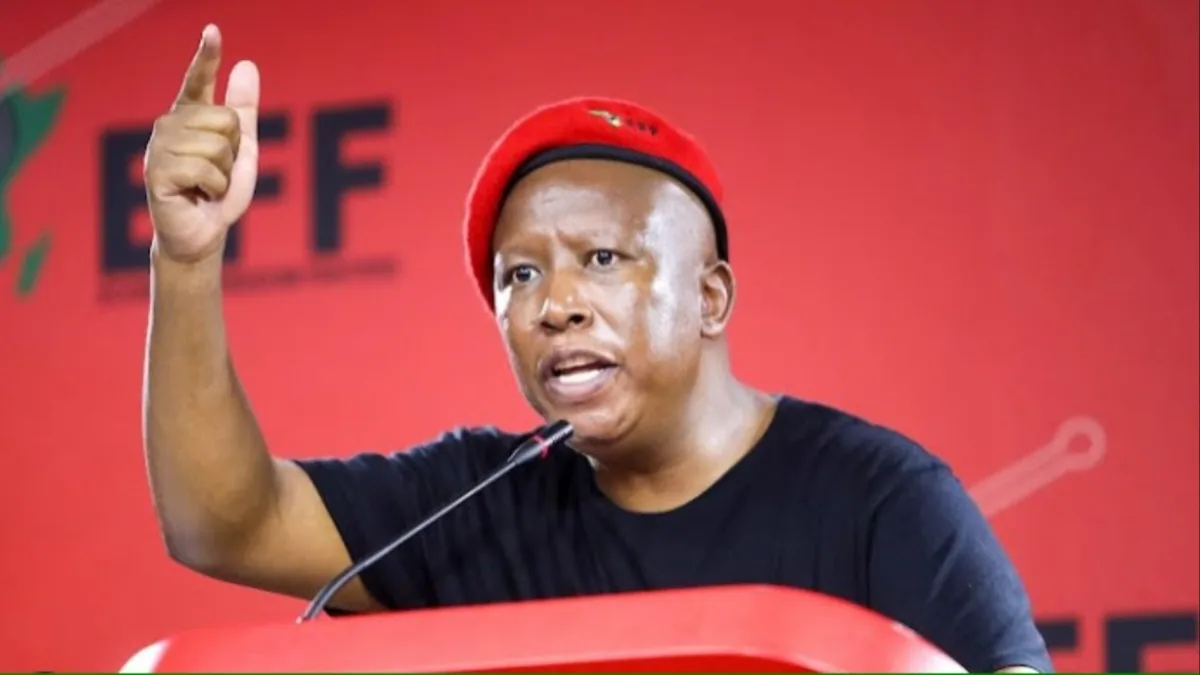
Julius Sello Malema, born on 3 March 1981 in Seshego, Limpopo, is South Africa’s most polarising and provocative political figure. As the founder and Commander-in-Chief (CIC) of the Economic Freedom Fighters (EFF), he has built one of the fastest-growing political movements in post-apartheid South Africa on a platform of radical economic transformation — calling for land expropriation without compensation, the nationalisation of mines and banks, and fierce opposition to what he describes as the continued economic exclusion of Black South Africans.
What makes Malema uniquely fascinating — and uniquely controversial — is the tension between what he preaches and what he practises. A man who routinely attacks the wealthy elite of the ANC as looters and capitalist stooges is himself estimated to be worth approximately $30 million (≈ R554 million) in 2026, making him the fourth wealthiest politician in South Africa. He sits behind only Cyril Ramaphosa (~$450M), Tokyo Sexwale (~$200M), and Pravin Gordhan (~$35M) in the rankings of South Africa’s richest political figures. The contrast between his political rhetoric and his personal wealth has become one of the defining paradoxes of contemporary South African public life.
Malema first rose to national prominence as president of the ANC Youth League from 2008 to 2012 — a period during which he was one of the most disruptive, outspoken, and consequential political voices in the country, championing Jacob Zuma’s rise to power before spectacularly falling out with the ANC establishment and being expelled from the party in 2012. He founded the EFF in 2013, and the party has grown from a fringe movement to a significant parliamentary force, consistently polling third in national elections. His wealth, his legal battles, and his political platform are all intertwined — and understanding his net worth requires understanding the full arc of his political career.
Julius Malema’s Net Worth in 2026
Julius Malema’s estimated net worth in 2026 is approximately $30 million, equivalent to roughly R554 million at current exchange rates. This figure comes with more caveats than virtually any other politician on the South African wealth rankings — Malema’s assets are partly held through trust structures, some have been subject to court-ordered attachment, and the full picture of his financial position has never been comprehensively disclosed in any official or court-verified document.
The estimate draws on reporting from amaBhungane, the Sunday Times, Daily Maverick, and from documents submitted in the course of SARS tax proceedings and various civil and criminal cases. It includes the estimated value of property in Sandton and Limpopo, vehicles, and business interests — some of which Malema disputes as belonging personally to him rather than to trusts or other parties. It does not include assets that may be held through nominees or structures that have not emerged in public reporting.
His fortune is the most disputed on the rankings — drawn partly from trust structures linked to government tender contracts in Limpopo, and partly from undisclosed sources investigators have yet to fully trace.
What is not disputed is Malema’s lifestyle. He wears luxury watches, drives high-end vehicles, travels internationally with an entourage, and owns real estate in some of South Africa’s most expensive postcodes. A Member of Parliament earns approximately R1.4 million per year — a salary entirely inconsistent with the life he visibly leads. The gap between his declared income and his observable lifestyle is, and has been for years, the central unanswered question of his public financial life.
Early Life & Rise Through the ANC Youth League
Julius Malema was born into a working-class family in Seshego, a township outside Polokwane in Limpopo. His mother, Florence Malema, raised him largely on her own — working as a domestic worker to support the family. It is a background he references constantly in his political speeches, and it provides genuine biographical grounding for his populist rhetoric about economic inequality. He has described wearing the same school uniform for years and not having enough to eat — a childhood that stands in sharp contrast to the life he now lives.
Malema joined the ANC Youth League at the age of nine and was elected to its Limpopo branch leadership while still at school. He studied at the Hwiti High School in Seshego and later enrolled at the Tshwane University of Technology for a building and construction course — studies he has said he never completed. His ascent through ANC Youth League structures was rapid and driven more by political skill, oratorical ability, and factional positioning than by academic achievement or professional credentials. By 2008, he was elected national president of the ANCYL.
It was during his time as ANCYL president — from 2008 to 2012 — that the financial questions began. Government tender contracts in Limpopo, awarded to companies and trusts with links to Malema and his associates, generated the wealth that investigators believe forms the foundation of his current fortune. Malema’s defenders argue that these business interests were legitimate and separate from his political role. His critics — and eventually the courts and SARS — took a rather different view.
“I come from nothing. My mother cleaned other people’s houses so I could eat. Don’t tell me about poverty — I have lived it. That is why I fight.” — Julius Malema, addressing EFF supporters at a 2022 rally in Johannesburg, while wearing a watch estimated at R300,000.
The On-Point Engineering Scandal Explained
The single most scrutinised chapter in Julius Malema’s financial history is the On-Point Engineering trust — a business entity linked to Malema that received government construction contracts worth tens of millions of rands in Limpopo, primarily during the period when Malema was simultaneously the most powerful political figure in that province through his ANCYL and ANC connections.
On-Point Engineering was not technically owned by Malema — it was structured as a trust, with associates as registered trustees. This structure allowed Malema and his legal team to argue that the company’s income and assets were not personally his. Investigators and the South African Revenue Service were unconvinced. SARS assessed that Malema had benefited financially from On-Point’s income and pursued him for unpaid tax on that basis. The trust received contracts for construction and infrastructure projects in the Limpopo government — projects worth an estimated R50 million to R70 million across multiple awards.
The core allegation — which Malema has consistently denied — is that On-Point was a mechanism through which Malema used his political influence in Limpopo to channel government procurement to a business that personally enriched him, without that enrichment appearing directly in his name. This structure is a well-documented technique used by politically exposed persons across South Africa, as documented extensively in the Zondo Commission into state capture. Whether Malema’s specific arrangements crossed the line from clever structuring into fraud or corruption has not been conclusively established in a court of law — though the financial scrutiny is ongoing.
In 2012, the North Gauteng High Court ordered that properties linked to Malema be attached by SARS to secure his tax debt — a moment that briefly made his financial affairs front-page news across the country. Among the attached assets were his Sandton home and his Limpopo farm. Malema challenged the attachment and reached settlements with SARS on some of the outstanding amounts, though the full scope of his tax exposure has never been publicly resolved.
Julius Malema’s Assets: Properties, Cars & Lifestyle
Despite the legal battles and scrutiny, Julius Malema lives an undeniably lavish life by the standards of a sitting Member of Parliament. His observable assets — documented through court proceedings, investigative journalism, and his own public appearances — include the following.
Properties
Malema owns or has owned property in Sandton, Johannesburg’s wealthiest suburb — a home valued at several million rand that was briefly attached by SARS before legal proceedings were resolved. He also owns a farm in Limpopo, which he has used for personal purposes including traditional ceremonies and community gatherings. Additional property interests have been reported but not fully verified. For context, a mid-range Sandton townhouse trades at R3–R7 million; Malema’s reported property profile sits significantly above this range.
Vehicles
Malema is regularly photographed and seen in high-end vehicles — Range Rovers, Mercedes-Benz SUVs, and other luxury cars. He has never publicly disclosed ownership of specific vehicles in detail, and some have been attributed to the EFF party rather than to him personally. The distinction matters legally but has not deterred widespread reporting on his transport habits.
Watches & Clothing
Perhaps no aspect of Malema’s lifestyle attracts more pointed commentary than his taste in watches. He has been photographed wearing timepieces from Breitling, Hublot, and other luxury brands, with individual pieces estimated at between R150,000 and R400,000 each. His wardrobe — predominantly EFF-branded red overalls for political occasions, but private-life appearances regularly feature designer clothing — has also been the subject of commentary given his party’s working-class messaging.
Travel & Entertainment
Malema travels internationally on a regular basis for political meetings, Pan-African solidarity events, and speaking engagements. He travels with security and support staff. Reports from investigative journalists have detailed stays in upmarket hotels in London, Dubai, and various African capitals. The cost of this travel, when not covered by the EFF or parliamentary budgets, represents a significant additional personal expenditure that has added to questions about the sources of his income.
SARS Tax Debt & Legal Battles
The relationship between Julius Malema and the South African Revenue Service (SARS) has been one of the longest-running legal dramas in South African political life. SARS began pursuing Malema for unpaid taxes as far back as 2011, with assessments linked primarily to income received through or attributed to the On-Point Engineering trust and related structures.
In 2012, a court granted SARS the right to attach and sell assets linked to Malema to recover an outstanding tax debt that was reported at the time to be in the region of R16 million. Properties in Sandton and Limpopo were listed for attachment. Malema challenged the process aggressively through the courts and ultimately reached arrangements with SARS that prevented the forced sale of his primary assets, though the terms of any settlement have not been made public.
Additional tax proceedings have continued in subsequent years, relating both to his personal income and to the business interests of entities associated with him. SARS has not publicly confirmed the current status of all proceedings. Malema has consistently characterised the tax actions against him as politically motivated — orchestrated by ANC-aligned forces seeking to destroy him after his expulsion from the party. SARS, as an independent institution, has maintained that its actions are based strictly on tax law compliance.
Beyond SARS, Malema has faced criminal corruption charges relating to the awarding of the Polokwane Water and Sanitation tender — a case that has moved slowly through the court system. He has pleaded not guilty and his legal team has consistently attacked the credibility and political motivation of the prosecution. As of mid-2026, those proceedings remain ongoing. The combination of SARS debt, criminal charges, and civil litigation has made Julius Malema one of the most legally embattled politicians in South Africa — a distinction that sits awkwardly alongside his positioning as the moral voice of the oppressed.
EFF Salary: What Does Malema Earn as an MP?
As a Member of Parliament, Julius Malema earns a parliamentary salary of approximately R1.4 million per year (roughly $75,000). This is the standard salary for an MP and while it places Malema comfortably in the top few percent of South African income earners, it is categorically insufficient to explain his lifestyle, assets, or estimated net worth. A parliamentary salary of R1.4 million per year, accumulated over his entire time as an MP since 2014, would total approximately R17 million before tax — a fraction of his estimated R554 million fortune.
The EFF as a party also pays salaries and allowances to its senior leadership from parliamentary funding it receives as a registered political party. The exact amounts paid to Malema through EFF party structures are not publicly disclosed. There have been reports that EFF leaders receive additional income through the party, but the EFF’s internal financial governance and the extent of any personal payments to Malema beyond his parliamentary salary have not been subject to independent audit in the public domain.
It is worth noting that the EFF’s party funding — which is derived partly from state allocations based on electoral performance and partly from private donors — has itself been the subject of questions. Under South African law, political parties are not required to disclose the identity of all donors below certain thresholds, creating opacity around the EFF’s funding model that mirrors, in some ways, the opacity around Malema’s personal finances.
How Malema’s Wealth Compares to Other SA Politicians
At an estimated $30 million, Julius Malema is the fourth wealthiest politician in South Africa in 2026 — a ranking that is deeply ironic given his political platform. He sits well below the top of South Africa’s political wealth rankings, which is dominated by ANC figures who benefited from BEE deal-making — but he is considerably wealthier than most serving MPs from any party.
| Rank | Politician | Est. Net Worth | Party |
|---|---|---|---|
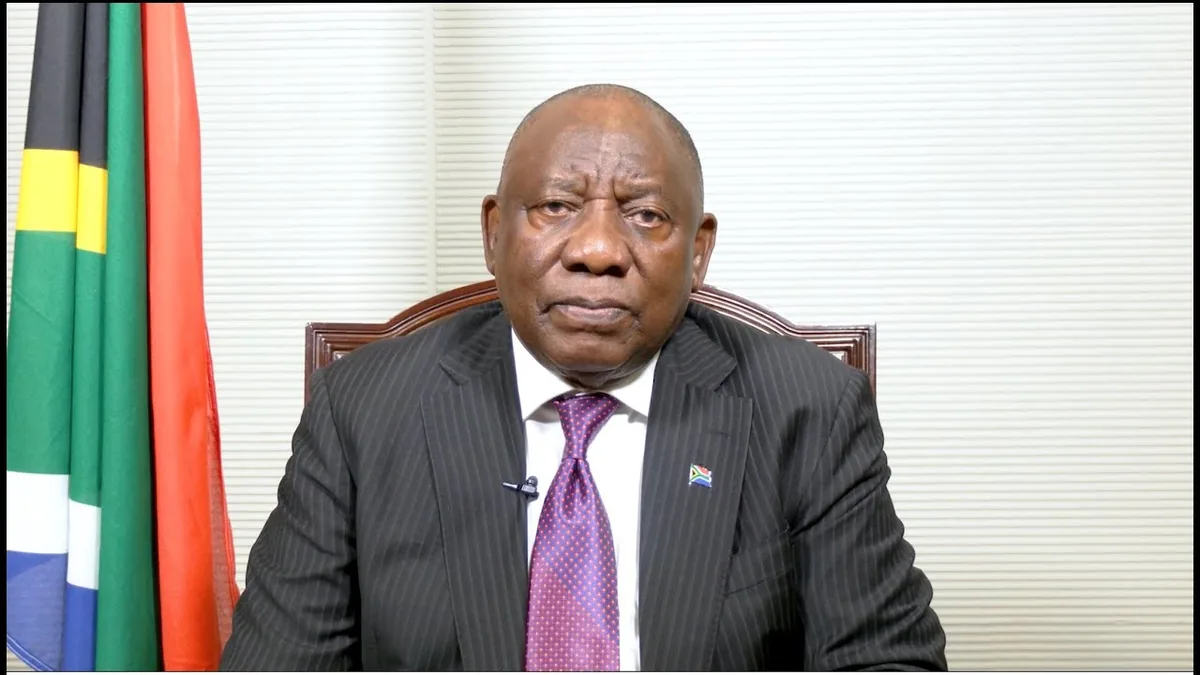
| #1 | Cyril Ramaphosa | ~$450M | ANC — President |
| #2 | Tokyo Sexwale | ~$200M | ANC — Former Minister |
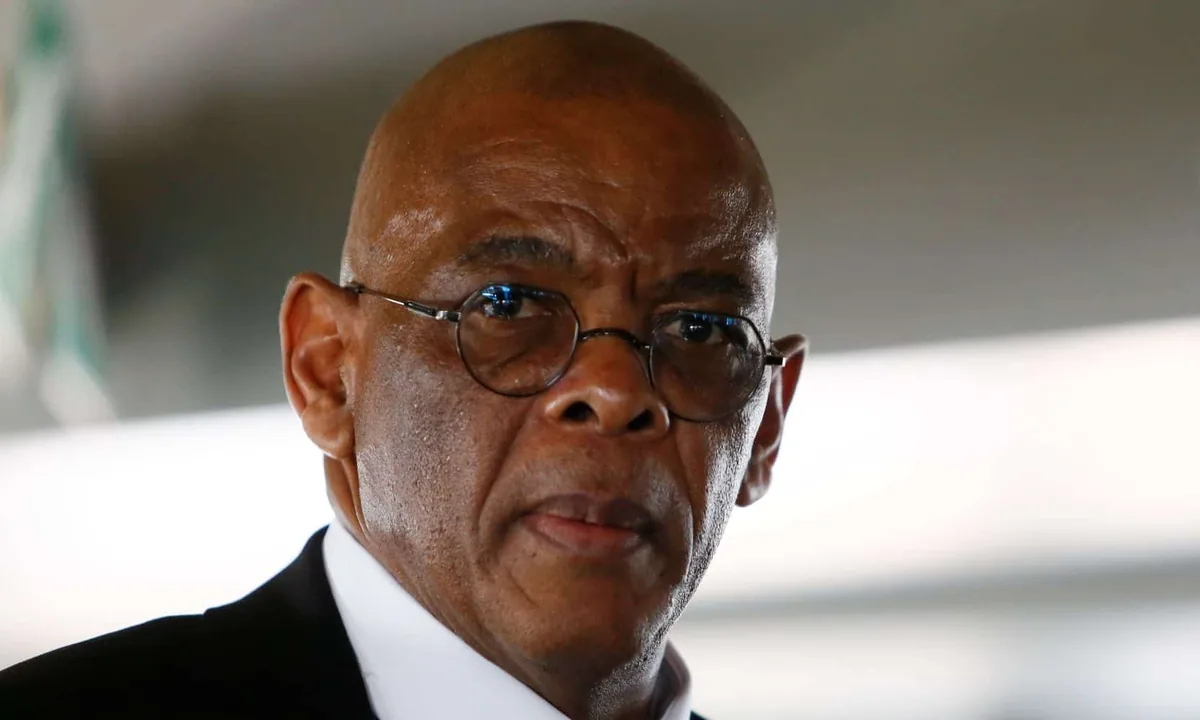
| #3 | Pravin Gordhan | ~$35M | ANC — Former Finance Minister |
| #4 | Julius Malema ← YOU ARE HERE | ~$30M | EFF — Founder & CIC |
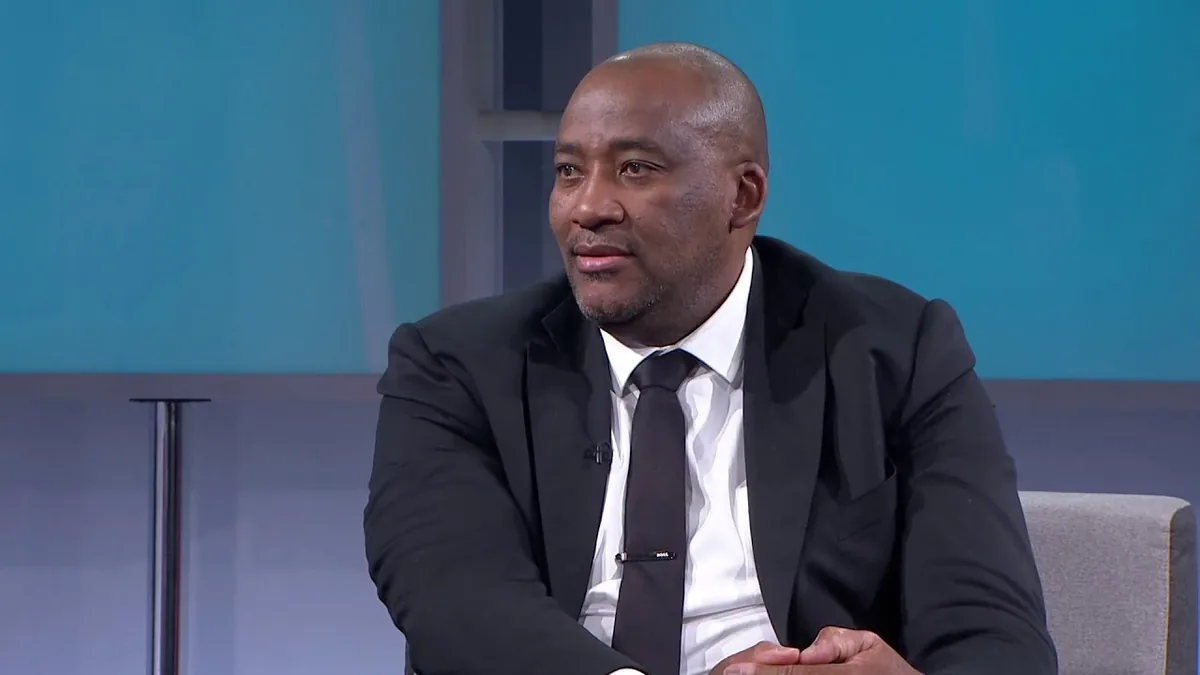
| #5 | Gwede Mantashe | ~$25M | ANC — Energy Minister |
| #6 | John Steenhuisen | ~$10M | DA — Deputy PM |
What makes Malema’s position on this table uniquely interesting is the source of the wealth, not just its size. Ramaphosa’s fortune was built through BEE transactions — controversial but legal and policy-driven. Gordhan’s is largely seen as career savings and legitimate investments. Malema’s estimated $30 million, by contrast, exists in a legal grey zone that investigators have never fully resolved. His wealth is the most contested on the entire list — and the most politically charged.
How Did Julius Malema Get So Rich?
The honest answer is: nobody outside Malema’s inner circle knows with certainty. But the most credible reconstruction of his financial history points to a combination of the following sources.
1. Government Tenders in Limpopo (The Main Source). The On-Point Engineering trust and related structures received government construction contracts in Limpopo during Malema’s period of peak political influence in that province. Investigative reporting by amaBhungane and others has traced tens of millions of rands in contract income through these structures. Whether Malema personally received all, some, or any of this income — and in what form — is the central unresolved question. SARS believed he did, and pursued him accordingly.
2. Political Donations & Support Networks. Politicians of Malema’s profile in South Africa attract financial support from business people and politically connected individuals who see value in proximity to power. The EFF, as a growing parliamentary force, has business backers who attend fundraising events and contribute to party operations. Whether any of this translates to personal benefit for Malema is not documented.
3. Speaking Fees & Intellectual Property. Malema is one of the most in-demand political speakers in Africa. He speaks at universities, conferences, Pan-African events, and international forums. Speaking fees for political figures of his stature can range from tens of thousands to hundreds of thousands of rands per engagement. Across a career spanning more than a decade at the top of South African politics, this income stream alone could be meaningful — though it would not explain his full estimated wealth.
4. Property Appreciation. Properties purchased in Sandton and Limpopo at earlier valuations have appreciated significantly over the period of his political career. A property bought in Sandton in 2010 at R3–4 million might be worth R7–10 million or more in 2026, depending on location and condition. Property appreciation is a legitimate and common form of wealth creation for South Africans who bought in the right areas at the right time.
“The Julius Malema wealth question is South Africa’s most politically charged financial mystery. He preaches revolution, lives like a mogul, fights tax collectors in court, and somehow remains one of the most popular politicians in the country. The contradiction isn’t a bug in his brand — for millions of supporters, it’s barely even noticed.”