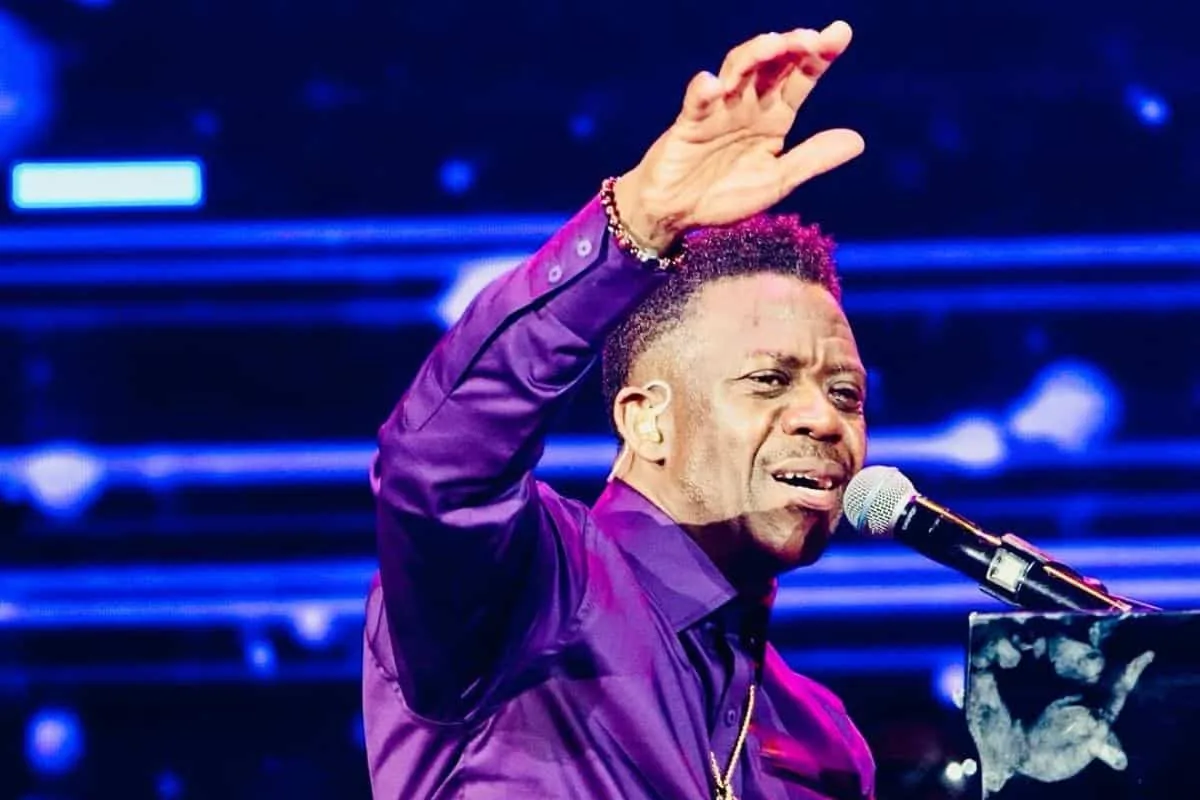

Who Is Winnie Mashaba?
Winnie Mashaba is one of South Africa’s most enduring and beloved gospel artists — a Limpopo-born singer who has been serving her audience through Sepedi-language worship music since 1993. With a career spanning more than three decades, she has built a devoted, multigenerational following across Limpopo, Mpumalanga, and Gauteng’s northern townships, where Sepedi is the primary spoken language and where her albums have been a fixture in homes, churches, and vehicles for as long as most fans can remember.
Despite her remarkable longevity and the scale of her regional influence, Winnie Mashaba remains one of South African gospel’s most underrecognised names on the national mainstream stage. This is not a reflection of her talent or her commercial performance — it is a structural reality of how the South African music industry has historically measured and rewarded artists. Language-specific gospel, sung predominantly in Sepedi rather than Zulu or English, has long been underrepresented in national radio playlists, award nominations, and mainstream press coverage. Within her target community, however, Winnie Mashaba is not simply popular — she is an institution.
“In Limpopo, you don’t need a chart position to know who the queen of gospel is. Winnie Mashaba’s music is in every home, every church, every taxi. She is the soundtrack of a people.”
Winnie Mashaba’s story is also one of financial sustainability built on community loyalty rather than viral moments or celebrity crossovers. She has never chased a pop hit or reinvented herself for a new audience. She has simply continued to make music for the people who love her — and those people have repaid that faithfulness with decades of consistent album purchases, church bookings, and concert attendance. In an industry where artists rise and fall within a single album cycle, that kind of loyalty is the most durable commercial foundation possible.
For context on how she fits within the broader SA gospel industry, see our full guide to the richest gospel artists in South Africa 2026, where she ranks #10 overall. For the wealthiest South Africans across all industries, browse our richest South Africans category.
Winnie Mashaba Net Worth 2026 — The Estimate
Winnie Mashaba’s estimated net worth in 2026 is approximately R8–10 million (roughly $550,000 at current exchange rates). This figure is compiled from available entertainment industry data, media reports, and analyst estimates — it is not an audited or officially disclosed figure. As with all independent gospel artists whose careers are built primarily on regional rather than national commercial infrastructure, the true figure may be higher or lower depending on undisclosed assets, property holdings, and personal financial arrangements that are not publicly available.
What can be said with reasonable confidence is that her net worth reflects more than 30 years of steady, consistent earnings across regional album sales, church engagements, and live performances — supplemented in more recent years by growing digital streaming revenue as platforms like Boomplay and Spotify extend the reach of vernacular gospel to younger listeners who weren’t part of the physical CD era. She does not have the multi-decade international touring income of Benjamin Dube, the television platform income of Rebecca Malope, or the corporate endorsement earnings of Dr Tumi. But she has something that all three of those artists would recognise and respect: a fiercely loyal community that has bought her music consistently for three decades, and a catalogue that continues to generate passive income long after each album’s release.
Her placement at #10 in the SA gospel wealth rankings is not a commentary on her talent or her cultural significance — it is simply a reflection of the structural gap between language-specific regional artists and the cross-language, nationally distributed, television-supported artists who dominate the top five. Within the Sepedi gospel space specifically, Winnie Mashaba has no commercial peer. She is, by any reasonable assessment, the wealthiest and most successful Sepedi-language gospel recording artist South Africa has produced.
Early Life and Background
Winnie Mashaba was born and raised in Limpopo Province, in the heartland of Sepedi-speaking South Africa. Precise biographical details about her birthdate and early childhood are not extensively documented in the public record — a reality common among artists from rural and semi-rural South African communities whose early lives predated the digital age of media coverage. What is documented is that she grew up in a deeply religious household where music was an integral part of worship and community life from her earliest years.
Like many South African gospel artists of her generation, Mashaba’s formal musical education was grounded in the church rather than in conservatories or formal institutions. The choir, the congregation, and the Sunday service were her training ground — and they gave her something that formal music education cannot replicate: a deep, intuitive understanding of how gospel music functions within the lives of its listeners. She did not learn to perform gospel music academically. She learned it as a living practice, embedded in the rhythms of daily faith and community belonging.
By the early 1990s, she had developed a vocal identity and a musical vision distinctive enough to attract the attention of gospel music producers operating in the Limpopo market, and in 1993 she released her debut recording — beginning one of the longest continuous careers in the history of South African gospel music.
Music Career and Discography
Winnie Mashaba entered the South African gospel recording scene in 1993, at a time when the industry was still dominated by choral traditions and the township gospel sound pioneered by artists from Johannesburg and Durban. Her decision to record primarily in Sepedi (Northern Sotho) — the dominant language of Limpopo and a significant vernacular in parts of Mpumalanga and Gauteng — was not commercially cautious. It was a deliberate act of cultural affirmation that defined both her audience and her legacy.
Over the three decades that followed, she built an extensive discography of gospel albums that sold consistently across the Limpopo market and in communities across South Africa where Sepedi speakers make up significant portions of the population. Her albums are characterised by a warm, conversational vocal style that feels less like performance and more like testimony — a quality that resonates powerfully in the church settings where much of her music is primarily experienced. Notable albums from her catalogue include releases that have achieved strong regional sales and consistent radio play on Limpopo community and regional stations.
A landmark moment in her broader national visibility came when she performed at the Replenishment Concert alongside gospel heavyweights including Dr Tumi, Benjamin Dube, and Ntokozo Mbambo — placing her on a national stage alongside some of the most commercially successful gospel artists in the country’s history. Her presence at that event was not incidental; it reflected the deep respect her peers hold for what she has built and sustained over more than 30 years.
Her digital presence has grown substantially in recent years, as younger Sepedi-speaking listeners discover her catalogue through Boomplay, Spotify, and YouTube. This transition from physical CD sales to digital streaming represents not just a revenue shift but a generational bridge — new listeners who didn’t grow up buying her albums in record stores or at church events are now finding her music through playlists and algorithm-driven discovery. For an artist whose commercial model was built almost entirely on physical sales and live performances, this digital dividend is a meaningful addition to her income streams.
How Winnie Mashaba Earns Her Money
Understanding where Winnie Mashaba’s estimated R8–10 million net worth comes from requires understanding the specific economics of regional gospel in South Africa — which differs meaningfully from the national gospel economy that drives the wealth of artists like Rebecca Malope or Joyous Celebration.
| Income Stream | Estimated Contribution | Notes |
|---|---|---|
| Regional Album Sales & Royalties | 40–50% | Physical CD sales remain commercially significant in Limpopo and Mpumalanga markets. Church congregations purchase in bulk. A decades-long catalogue generates ongoing SAMRO royalty income. |
| Church Engagements & Live Performances | 30–35% | Church bookings across Limpopo, Mpumalanga, and Gauteng’s northern townships provide consistent year-round income. Easter and December are peak earning windows. Fees are lower than national headliners but volume is high. |
| Digital Streaming (Boomplay, Spotify, YouTube) | 10–15% | Growing rapidly as younger Sepedi-speaking listeners discover her catalogue on streaming platforms. Boomplay has been particularly important for extending vernacular gospel reach across southern Africa. |
| Regional Radio & Television Appearances | 5–10% | Regular appearances on Limpopo’s community and regional radio stations, SABC Sepedi programming (Munghana Lonene FM), and gospel television channels generate both direct fees and profile-building exposure. |
| National Gospel Events | Varies | Appearances at national events — including the Replenishment Concert alongside Dr Tumi and Benjamin Dube — carry premium fees and significantly extend her reach beyond her regional base. |
“Winnie Mashaba doesn’t need a national hit to sell out a church in Polokwane. She built her wealth the way the most enduring gospel artists always have — one faithful audience, one faithful album, one faithful performance at a time.”
It is worth noting that the regional gospel economy in which Mashaba primarily operates is often invisible to the national entertainment press. Artists operating in Sepedi, Tshivenda, or Xitsonga gospel markets build real, substantial wealth through mechanisms — community trust, church relationships, regional radio, local market album distribution — that Johannesburg-based industry observers rarely track or report on. The R8–10 million estimate for Winnie Mashaba’s net worth is almost certainly an undercount when these less-visible income streams are properly considered.
Cultural Legacy and Impact
Winnie Mashaba’s cultural legacy extends well beyond her album sales figures and concert fees. She is a pioneer of Sepedi-language gospel music as a commercially viable, artistically distinctive genre within the South African recording industry — a genre that, before her sustained success demonstrated its commercial potential, many industry gatekeepers had treated as too niche for serious investment. Her longevity in the market has made it easier for younger Sepedi-speaking gospel artists to find label support, radio play, and professional performance opportunities.
In communities across Limpopo, her music is woven into the fabric of everyday religious life. Her songs are sung at funerals, at thanksgiving services, at church anniversaries, and at family gatherings. This is a form of cultural embedding that the most commercially successful artists in any genre dream of achieving — and for Winnie Mashaba, it is simply the reality of what three decades of consistent, authentic ministry-through-music creates. Her music does not belong to a moment. It belongs to a people.
She is also a model of financial discipline and career sustainability for younger gospel artists. In a music industry that rewards novelty and punishes artists who refuse to chase trends, she has simply continued doing what she has always done — making music that speaks to the spiritual and emotional lives of her specific community — and the financial rewards have followed. Younger artists like Bucy Radebe and Lebo Sekgobela, who are building their own loyal followings in the current era, would do well to study the model she has built and sustained for over three decades.
Where She Ranks Among SA Gospel Artists
In our full ranking of the richest gospel artists in South Africa, Winnie Mashaba places at #10 — behind nationally distributed crossover artists who have benefited from television platforms, international touring, and multi-language catalogue reach. Here is the full picture for context:
| Rank | Artist | Est. Net Worth (ZAR) | Career Span |
|---|---|---|---|
| #1 | Rebecca Malope | ~R68M+ | 1988 – Present |
| #2 | Benjamin Dube | ~R75–92M | 1980s – Present |
| #3 | Dr Tumi | ~R40–50M | 2012 – Present |
| #4 | Joyous Celebration | ~R20M+ (collective) | 1994 – Present |
| #5 | Hlengiwe Mhlaba | ~R22–28M | 2005 – Present |
| #6 | Ntokozo Mbambo | ~R18–22M | 2000 – Present |
| #7 | Dumi Mkokstad | ~R15–20M | 2008 – Present |
| #8 | Lebo Sekgobela | ~R12–15M | 2008 – Present |
| #9 | Bucy Radebe | ~R10–12M | 2013 – Present |
| #10 | Winnie Mashaba | ~R8–10M | 1993 – Present |
All figures are estimates based on available media reports and entertainment industry data. They are not independently audited. ZAR converted at R18.47/$1 (May 2026).
For the full gospel industry breakdown — including how SA gospel wealth compares to the country’s richest rappers and DJs — visit our guides on the richest rappers in South Africa and the richest DJs in South Africa.