Who Is Elon Musk?
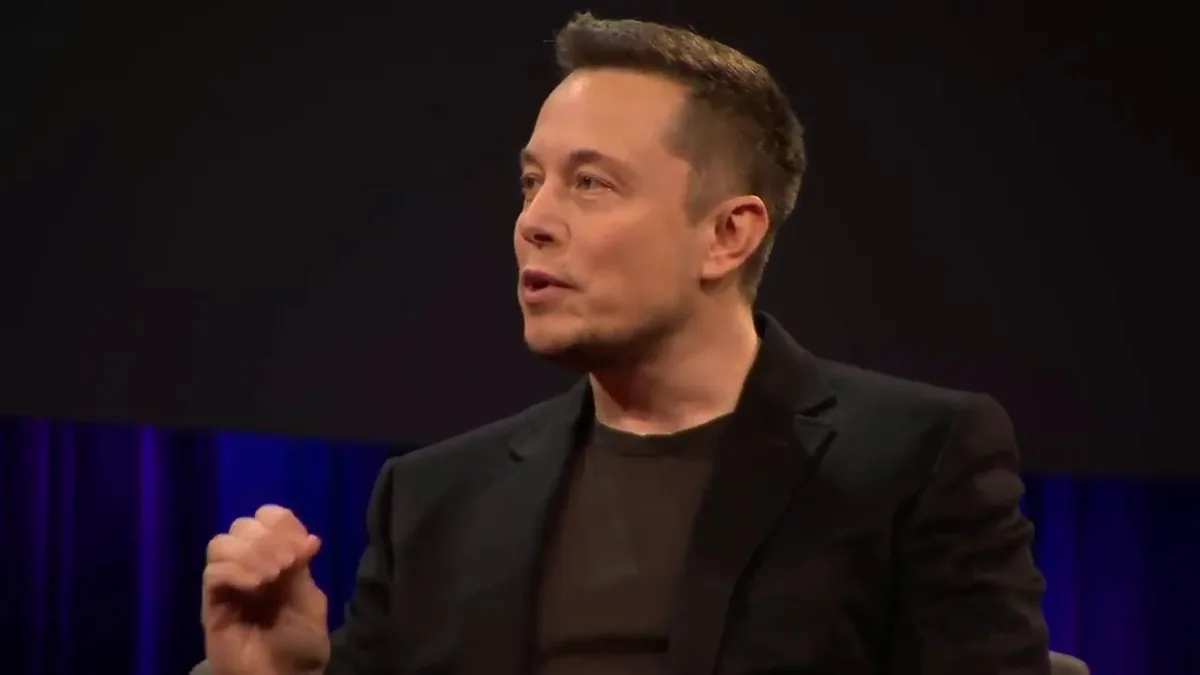
Elon Reeve Musk is a South African-born American entrepreneur and the wealthiest person in recorded history. Born on 28 June 1971 in Pretoria, South Africa, he left the country at age 17, eventually settling in the United States where he built a succession of world-changing companies. As of May 2026, his net worth is estimated at approximately $820 billion USD — equivalent to roughly R15.1 trillion at the current exchange rate of R18.47 to the dollar — making him richer than the next several wealthiest individuals on Earth combined, and the first person in history to surpass the $800 billion mark.
Musk is the chief executive of Tesla, the world’s most recognised electric vehicle company; the founder, CEO, and chief engineer of SpaceX, the private rocket and satellite internet company; and the owner of X (formerly Twitter). In February 2026, SpaceX merged with his artificial intelligence company xAI in what became the largest corporate merger in history, valued at a combined $1.25 trillion. That single deal added tens of billions of dollars to his personal fortune and accelerated his status as the world’s first potential trillionaire. Among all entrepreneurs to ever emerge from South Africa, no one has come close to what Musk has built.
“At ~R15.1 trillion, Elon Musk’s net worth exceeds South Africa’s entire GDP — which stood at approximately R7.3 trillion (about $395 billion) in 2025. Put differently, Musk is worth roughly twice the entire South African economy.”
Elon Musk Net Worth 2026 — In USD & South African Rands
Elon Musk’s net worth in May 2026 is estimated at approximately $820 billion (Forbes) or roughly R15.1 trillion at the current USD/ZAR exchange rate. Bloomberg’s Billionaires Index, which applies more conservative private company valuations and excludes certain contingent compensation, places the figure lower at approximately $690 billion — or R12.7 trillion. Both figures make Musk the wealthiest individual ever tracked by either organisation by an enormous margin. The Bloomberg tracker recorded his YTD gain to 19 May 2026 at +$47.6 billion (+7.7%) for the year.
The gap between the Forbes and Bloomberg figures stems primarily from how each values Musk’s stake in the private SpaceX–xAI combined entity — which accounts for the majority of his fortune. Forbes uses the full $1.25 trillion merger valuation; Bloomberg applies a discount for illiquidity and concentration risk. Both approaches are methodologically defensible, and the truth likely lies somewhere in between. For South African readers, the rand equivalent is equally dramatic in scale — R15.1 trillion is more than twice South Africa’s entire annual GDP.
| Year | Net Worth (USD) | Approx. ZAR (R18.47/$) | Key Driver |
|---|---|---|---|
| 2021 | ~$150B | ~R2.77 trillion | Tesla stock surge |
| 2022 | ~$250B (peak) / drops to ~$137B | ~R4.6T / ~R2.5T | Tesla peak; Twitter acquisition drag |
| 2023 | ~$180B | ~R3.32 trillion | Tesla recovery; xAI launch |
| 2024 | ~$430B (year-end) | ~R7.94 trillion | Tesla rally to $479; Trump election |
| Early 2026 | ~$852B (peak, Forbes) | ~R15.73 trillion | SpaceX–xAI merger; $1.25T valuation |
| May 2026 | ~$820B (Forbes) / ~$690B (Bloomberg) | ~R15.1T / ~R12.7T | Steady post-merger; Tesla down ~45% from peak |
Elon Musk’s Full Wealth Breakdown by Company (2026)
Unlike most billionaires who hold diversified portfolios of stocks, bonds, real estate, and private equity, Musk’s fortune is almost entirely tied to equity stakes in companies he founded, co-founded, or controls. This concentration creates extraordinary day-to-day volatility — his net worth can move by tens of billions of dollars in a single trading session. As of May 2026, the breakdown across his major assets is approximately as follows:
| Asset | Musk’s Stake | Est. Value (USD) | Est. Value (ZAR) | Notes |
|---|---|---|---|---|
| SpaceX–xAI (combined) | ~42–44% | ~$525B | ~R9.70 trillion | Merged Feb 2026; valued at $1.25T combined; Forbes primary driver |
| Tesla (TSLA) | ~11–13% | ~$180–200B | ~R3.32–3.69T | Includes 304M options from 2018 pay package, restored Dec 2025 |
| X (formerly Twitter) | ~79% | ~$15–20B | ~R277–369B | Acquired for $44B in 2022; valuation impaired but recovering |
| Neuralink | Majority | ~$8–10B | ~R148–185B | Brain-computer interface; not publicly valued |
| The Boring Company | Majority | ~$5–7B | ~R92–129B | Underground tunnelling; Las Vegas Loop operational |
| Cash & Other | — | Est. several billion | Tens of billions ZAR | Dividends, loan facilities, private investments |
* All figures are estimates based on Forbes, Bloomberg, and public company filings as of May 2026. Private company valuations are inherently uncertain. ZAR conversions use a rate of R18.47 per USD.
Early Life: Growing Up in Pretoria, South Africa
Elon Reeve Musk was born on 28 June 1971 in Pretoria, South Africa’s administrative capital — at the time still under the apartheid government. His father, Errol Musk, is a South African engineer who served on the Pretoria City Council; his mother, Maye Musk (née Haldeman), is a Canadian-born model and dietitian who raised Elon and his siblings largely on her own after the couple divorced in 1979. Musk therefore held both South African and Canadian citizenship from birth, a dual nationality that would shape his path out of the country.
Musk’s childhood was defined by intellectual precocity and social difficulty. He was an unusually bookish, introverted child who was bullied extensively throughout his school years — a trauma he has spoken about publicly in Walter Isaacson’s biography. He displayed a remarkable early talent for computers and programming: at age 12, he taught himself to code and built a space-themed video game called Blastar, which he sold to a computer magazine for $500 — a remarkably prescient foreshadowing of the rocket empire to come. He was, by his own account, so lost in thought and daydreams about inventions that his parents had his hearing tested, suspecting he had a hearing impairment rather than an exceptionally active inner life.
In 1988, at age 17, Musk obtained a Canadian passport and left South Africa. His stated reasons were twofold: an unwillingness to serve in the apartheid-era South African Defence Force, which enforced racial segregation policies he found morally repugnant; and a desire to reach the United States, which he viewed as the centre of economic opportunity and technological innovation. He attended Queen’s University in Kingston, Ontario, before transferring to the University of Pennsylvania, where he earned bachelor’s degrees in both physics and economics. In 1995, he moved to California to pursue a PhD in energy physics at Stanford University — and dropped out after two days, convinced the internet presented a more immediate world-changing opportunity.
Career: From Zip2 to a $1.25 Trillion Empire
Musk’s entrepreneurial career began in 1995, the same year he dropped out of Stanford, when he co-founded Zip2 — a web software company that provided online city guides and maps to newspapers. The company was acquired by Compaq in 1999 for approximately $307 million, netting Musk roughly $22 million for his stake. He immediately rolled those proceeds into his next venture: X.com, an online payments company, which merged with a competitor and became PayPal. When eBay acquired PayPal in 2002 for $1.5 billion, Musk walked away with approximately $180 million — the seed capital for everything that followed.
In 2002, he founded Space Exploration Technologies Corporation (SpaceX) with the explicit goal of dramatically reducing the cost of access to space and ultimately making humanity a multi-planetary species. It was considered an almost certainly doomed venture at the time — three of SpaceX’s first four rocket launches failed, nearly bankrupting the company. The fourth launch, in 2008, succeeded, and SpaceX has since become NASA’s primary commercial partner for crewed missions to the International Space Station, the world’s leading provider of orbital launches, and the operator of the Starlink satellite internet constellation, which serves millions of customers globally.
In 2004, Musk led the Series A funding round for Tesla Motors — an electric vehicle startup he did not found but quickly took control of — and became its chairman and later CEO. Tesla has since grown into the world’s most valuable automaker by market capitalisation. Subsequent ventures include Neuralink (brain-computer interfaces, 2016), The Boring Company (underground tunnelling, 2016), and xAI (artificial intelligence, 2023). The xAI venture and its subsequent merger with SpaceX in February 2026 represents the most consequential business development of Musk’s career to date. As a serial entrepreneur of South African origin, the scale of what he has built has no precedent in the country’s history.
The SpaceX–xAI Merger: The Deal That Changed Everything
In February 2026, SpaceX completed an all-stock merger with xAI — Musk’s artificial intelligence company — creating the largest private corporate combination in history. The deal valued SpaceX at approximately $800 billion (based on a December 2025 tender offer) and xAI at approximately $230 billion (based on a January 2026 funding round), for a combined entity valued at roughly $1.03–1.25 trillion. Musk holds approximately 42–44% of the combined company, making his stake alone worth in excess of $525 billion — equivalent to approximately R9.7 trillion.
The merger was widely seen as a strategic masterstroke: SpaceX’s Starlink infrastructure provides an unparalleled global data network, while xAI’s Grok models and computing infrastructure provide the intelligence layer. Together, the combined entity has ambitions spanning satellite communications, autonomous systems, robotics, and frontier AI research. Forbes credited the merger with adding approximately $84–100 billion to Musk’s personal net worth, and declared him the first person in history to have a documented fortune above $800 billion.
SpaceX has also filed for what is expected to be a blockbuster IPO, potentially targeting a valuation of $1.75 trillion in what could be the largest public offering in history. If priced at that level, Musk’s 42% stake alone would be worth approximately $735 billion — before accounting for Tesla, X, or any of his other holdings. The IPO is expected in late 2026, though no fixed date has been announced. If successful, it would very likely push Musk past the $1 trillion mark and formally make him the world’s first trillionaire.
Tesla: Risk, Reward & the Road to Robotaxis
Tesla remains the most visible component of Musk’s empire and the most publicly traded measure of his wealth — but in 2026 it has also become his biggest headache. After a peak share price of $479 in December 2024, Tesla stock had fallen approximately 45% by mid-2026, dragging billions off Musk’s personal net worth. The company’s Q1 2026 profits fell by 71%, driven by weaker global EV demand, growing competition from Chinese manufacturers like BYD, and reputational damage linked to Musk’s political activities in the United States.
Despite the headwinds, Tesla’s longer-term strategic positioning remains compelling. The company is aggressively developing a fully autonomous robotaxi platform and its Optimus humanoid robot — which Musk has described as potentially the most valuable product in Tesla’s history. If Optimus scales as management hopes, some analysts believe Tesla’s market cap could eventually be more valuable than any company that has ever existed. Musk owns approximately 11–13% of Tesla’s shares, with an additional 304 million stock options from his 2018 compensation package that were reinstated by the Delaware Supreme Court in December 2025. At Tesla’s current share price, his total Tesla exposure is worth approximately $180–200 billion (R3.3–3.7 trillion).
X (Twitter): The $44 Billion Bet — Where Does It Stand?
In October 2022, Musk acquired Twitter for $44 billion — a price widely considered excessive at the time, and even more so after the deal closed. He immediately renamed the platform X, fired approximately 80% of the company’s workforce, and transformed it from a regulated social media company into a more freewheeling platform with less content moderation. The move generated enormous controversy, a significant advertiser exodus, and a sharp decline in the platform’s valuation. At its nadir, some analysts valued X at less than $10 billion — less than a quarter of what Musk paid.
By 2026, the picture is more nuanced. X has reportedly returned to profitability, partly through subscription revenue from its X Premium service and partly through the departure of higher-cost employees. Estimates as of May 2026 place X’s value at approximately $15–20 billion (R277–369 billion) — still a fraction of the acquisition price, but recovering. For Musk’s overall net worth, X represents a relatively small component — a few percent of his total fortune — and its losses have been more than offset by the staggering gains in SpaceX–xAI’s valuation.
DOGE & Politics: How It Affected His Wealth
From January to May 2025, Musk served as head of the Department of Government Efficiency (DOGE) — a high-profile advisory role in President Donald Trump’s second administration, focused on cutting federal spending and streamlining government operations. The role generated extraordinary controversy: Musk’s aggressive public persona, his prolific posting on X, and the political associations he cultivated were credited by analysts with materially damaging Tesla’s brand, particularly in Europe and among progressive consumers in the United States.
A Yale study cited in media reports found that Musk’s political activities potentially cost Tesla between 1 million and 1.26 million US vehicle sales, while inadvertently boosting competitor sales by 17–22%. Tesla’s share price fell from its peak of $479 in December 2024 to below $220 by April 2025 — wiping an estimated $100+ billion off Musk’s personal net worth during that period. He stepped down from the DOGE role in May 2025, and Tesla’s shares have partially recovered since. The episode illustrated that for Musk, personal wealth, corporate performance, and political engagement are so intertwined that a shift in public opinion about him directly moves his net worth by amounts that dwarf most countries’ annual budgets.
Elon Musk & South Africa: A Complicated Bond
Musk’s relationship with South Africa is publicly complicated and privately complex. He was born in Pretoria, grew up during apartheid, attended school in Johannesburg, and left at 17. He has been candid about both his difficult childhood — the bullying he experienced, his difficult relationship with his father — and his philosophical reasons for leaving. He has said he could not bring himself to serve in a military that enforced apartheid, and that he saw his future in the United States, not South Africa.
In more recent years, Musk has become an increasingly vocal critic of South Africa’s post-apartheid government, using his platform on X to comment on land reform legislation, affirmative action policies, and what he characterises as systematic discrimination. His statements on these topics have drawn intense criticism from South African politicians and civil society, as well as from commentators who argue that a billionaire who left the country more than 35 years ago and never built a major business there should not be a primary voice on its internal affairs. South Africa’s government has publicly rejected his characterisations.
Despite the controversy, Musk’s origin story remains a source of genuine pride and fascination in South Africa — a country that has produced one of the most consequential entrepreneurs in human history. His net worth of approximately R15.1 trillion is a number that has no South African frame of reference: it is more than the JSE’s entire market capitalisation, more than the national budget for 30 consecutive years, and more than the combined wealth of every other South African-born billionaire many times over.
Personal Life & Family
Musk is one of the most personally unconventional figures in global business. He has been married twice — to Justine Wilson (2000–2008) and Talulah Riley (twice: 2010–2012 and 2013–2016) — and has had long-term relationships with Grimes (musician Claire Boucher) and others. As of 2026, he has 14 children by multiple partners, making him one of the most prolific fathers among the world’s wealthiest individuals. His children include Nevada, Vivian (formerly Xavier), Griffin, Kai, Saxon, Damian, X Æ A-Xii, Strider, Azure, Exa, Techno, Arcadia, Seldon, and R.S.C.
He is based in Austin, Texas, having relocated Tesla’s headquarters there from California in 2021. He has described himself publicly as having Asperger’s syndrome — a form of autism spectrum disorder — which he cited in a 2021 Saturday Night Live appearance as the first time a person with Asperger’s had hosted the show. He is known for sleeping at his factories during production crises, working extreme hours, and maintaining an extremely high-caffeine, low-sleep schedule. He is a US citizen since 2002 and retains his South African and Canadian citizenships.