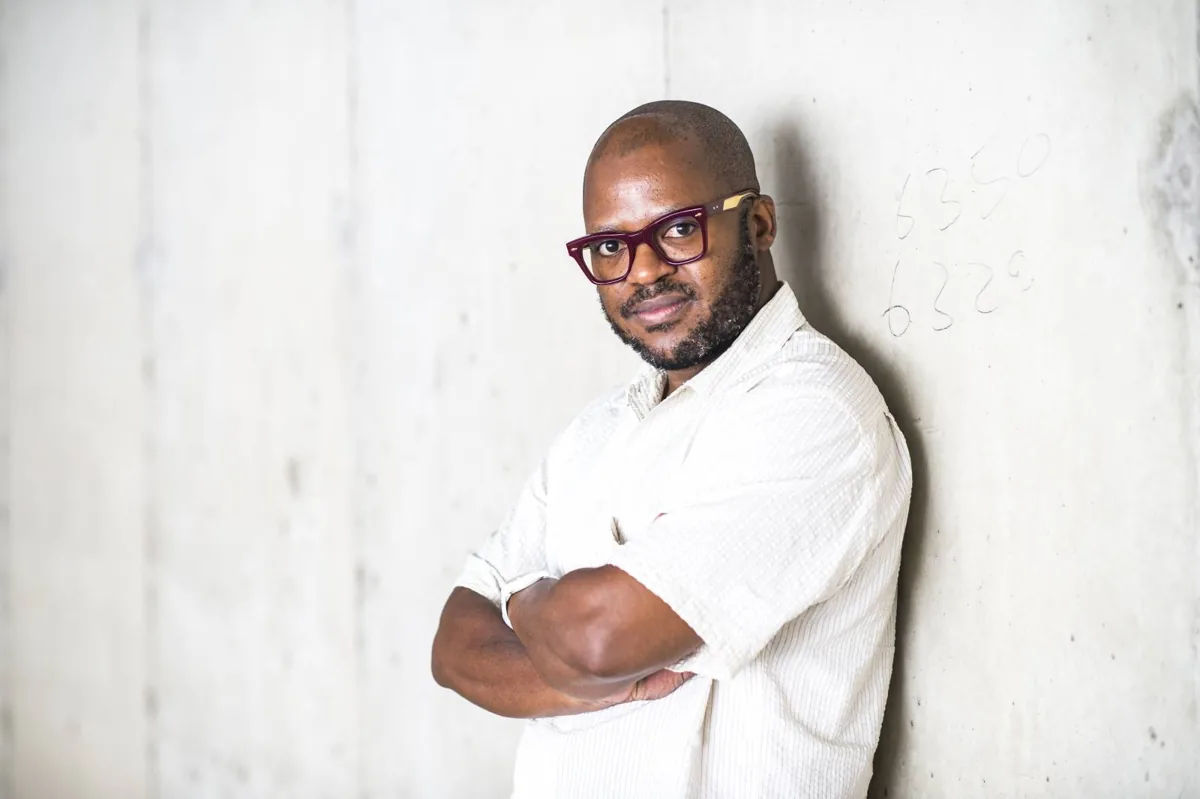

Who Is Sol Phenduka?
Solomzi Thandubuntu Phenduka, known everywhere as Sol Phenduka, is one of South Africa’s most recognisable media personalities — a broadcaster, DJ, musician, and podcast co-host whose career has taken him from radio intern to the co-host seat of the country’s biggest podcast. Born on 18 February 1987 in Vosloorus, on the East Rand of Gauteng, Sol grew up in working-class circumstances and built his career entirely through talent, persistence, and an ability to connect with audiences across every format he has worked in.
He is best known as the co-host of Podcast and Chill with MacG — South Africa’s most-watched podcast, produced under the Podcast and Chill Network owned by MacGyver “MacG” Mukwevho. Sol joined the show alongside the mysterious “Ghost Lady” and helped transform it from a growing online podcast into a cultural institution with over 1.7 million YouTube subscribers and hundreds of millions of views. His candid personality, sharp instincts, and genuine chemistry with MacG became one of the show’s defining qualities — making him a household name in his own right, not just a supporting act.
Beyond the podcast, Sol has worked across multiple major South African radio stations — from YFM and 5FM to Kaya 959 — and has released music as both a rapper and producer. He is also an active DJ on the South African events circuit, performing at festivals, corporate events, and club nights nationwide. His career has not been without controversy, and a high-profile firing from Kaya FM in September 2025 added a turbulent chapter to an already colourful professional story. As of May 2026, Sol remains active on Podcast and Chill while reportedly fielding new radio offers and exploring what the next phase of his career looks like.
Sol Phenduka’s Net Worth in 2026 (in Rands)
As of May 2026, Sol Phenduka’s net worth is estimated at between R5 million and R8 million (approximately $270,000 to $430,000 USD). This places him firmly in the top tier of South African media personalities — not in the R50 million+ bracket of long-established broadcast legends, but comfortably above the average for creators and radio hosts at his level of experience and reach. The range reflects genuine uncertainty: Sol does not publicly disclose his earnings, and his income is made up of several streams that fluctuate significantly month to month.
Built across podcast co-hosting income, his Kaya FM salary (before his September 2025 exit), DJ bookings, music royalties, and brand endorsements — with Podcast and Chill being by far his most valuable career asset.
The key components driving this estimate are his earnings from the Podcast and Chill YouTube channel (shared with MacG and the broader network), his former Kaya FM salary — reported at approximately R100,000 per month by multiple industry sources — DJ performance fees, music streaming royalties, and periodic brand endorsement work. His net worth has grown steadily since 2020 as the podcast’s audience exploded, and while the Kaya FM exit in September 2025 removed a significant recurring income stream, his continued presence on Podcast and Chill means his primary earning engine remains intact.
| Income Stream | Est. Monthly (ZAR) | Notes |
|---|---|---|
| Podcast and Chill (YouTube share) | R80,000 – R200,000+ | Share of AdSense + sponsorship integrations |
| Kaya FM salary (until Sept 2025) | ~R100,000 | Reported by industry sources; contract terminated Sept 2025 |
| DJ bookings & live events | R20,000 – R80,000 | Varies heavily by bookings; weekend gigs ongoing |
| Brand endorsements | R20,000 – R100,000 | Periodic; reduced after Kaya FM controversies |
| Music royalties (Spotify, Apple Music) | R5,000 – R15,000 | Passive income from his catalogue; growing with podcast fame |
All figures are estimates based on published industry data, Social Blade analytics, and credible media reporting. Actual earnings may differ significantly. Exchange rate used: R18.47 = $1 USD.
Early Life, Education & How It All Started
Sol Phenduka was born and raised in Vosloorus, a township in the Ekurhuleni metropolitan municipality on Gauteng’s East Rand. He was raised by a single mother — a background he has spoken about openly and which has shaped the grounded, hustle-first approach he brings to his career. He attended St Francis College in Benoni, matriculating in 2006, and went on to earn a Bachelor’s degree from the University of Johannesburg — giving him a formal educational foundation that many of his peers in the creator and radio space lack.
Sol’s early passion was music, beginning as a rapper in his youth and eventually performing reggae as part of a group called Sol and the Mambinos. The group eventually disbanded, but Sol’s love of music never left — he transitioned into DJing and music production, and between 2010 and 2012 released two singles and a self-titled album that remains available on streaming platforms including Spotify and Apple Music. While the music career did not make him wealthy, it built the performance instincts and audience-reading skills that would later make him so effective as a broadcaster and podcast host.
He entered broadcasting as an intern at YFM in 2008 — one of South Africa’s most competitive radio environments and the launching pad for many of the country’s biggest media careers. He worked his way into on-air roles at YFM before moving to 5FM, where he contributed to the breakfast show alongside DJ Fresh. Despite facing a suspension at 5FM — a pattern that would recur later in his career — Sol demonstrated the resilience that has become a defining feature of his professional story. He has spoken candidly about earning almost nothing at YFM in his early years, describing his pay as “peanuts” — a reality for most entry-level South African radio presenters, where the experience and profile-building value far outweighs the financial reward in the early stages.
Sol also appeared on Big Brother Mzansi Season 1 in 2014, finishing fifth. The national television exposure significantly boosted his public profile and helped open doors that might otherwise have remained closed — a reminder that in South African media, cross-platform visibility is often the real currency.
Podcast and Chill with MacG — The Career Maker
The single biggest turning point in Sol Phenduka’s financial life was his involvement in Podcast and Chill with MacG. The show, launched by MacGyver “MacG” Mukwevho in July 2018 and produced under the Podcast and Chill Network, had already begun gaining traction when Sol joined as a regular co-host alongside MacG and the unnamed “Ghost Lady.” Sol’s addition brought a distinct energy to the show — quick-witted, outspoken, and willing to go to places that more cautious broadcasters would not — and the combination of his personality with MacG’s drove the podcast’s audience to new heights.
By 2025 and into 2026, the podcast’s YouTube channel had surpassed 1.7 million subscribers and accumulated more than 417 million total video views. Episodes regularly run over 90 minutes, generating exceptional watch time that YouTube rewards with strong AdSense payouts. The channel earns an estimated R200,000 to R600,000 per month in AdSense revenue — a figure that is split between the show’s presenting team and the Podcast and Chill Network’s operational costs. Sol’s share of this, combined with his cut of the show’s brand sponsorship integrations, represents his most significant and most consistent monthly income.
“Podcast and Chill didn’t just change Sol’s income — it changed his identity in the industry. Before the podcast, he was a well-regarded radio presenter. After it, he was a cultural voice. That transition from presenter to personality is worth far more than any single salary figure.”
What makes Podcast and Chill particularly valuable as an income vehicle for Sol is its combination of revenue streams: AdSense, in-episode brand sponsorships, the podcast’s own merchandise and network brand deals, and the platform profile that drives his DJ booking rates and personal endorsement value. It is also, critically, a platform he does not own — the show belongs to MacG and the Podcast and Chill Network. This distinction is important for understanding Sol’s financial position relative to MacG’s: while Sol earns well from the show, MacG earns from the show plus the network infrastructure, the Chiller Market merchandise, Grandeur Gin, Chillers Punch, and the full suite of network shows. Sol’s earnings from the podcast are substantial; MacG’s are considerably larger.
The show’s brand partnership list reflects its premium positioning in the South African advertising market. Sponsors have included major South African and multinational brands in the beer, telecommunications, FMCG, and entertainment categories — deals that typically pay between R150,000 and R500,000 per integration at the scale of audience the podcast commands. Sol’s personal endorsement value has risen in tandem with the show’s growth, making him an independently bookable face for brands targeting young, urban South African men — a demographic that advertisers pay top rates to reach.
Kaya FM Breakfast Show — Rise & Controversial Exit
In 2022, Sol Phenduka joined Kaya 959 (Kaya FM) as the co-host of the station’s breakfast show alongside Dineo Ranaka, later transitioning to the Siz the World breakfast show with Sizwe Dhlomo and Mpho Maboi. It was one of the most prestigious radio slots he had occupied in his career — Kaya FM is one of South Africa’s highest-rated commercial radio stations, and its breakfast show slot commands significant audiences and, accordingly, significant presenter salaries.
Multiple industry sources placed Sol’s Kaya FM salary at approximately R100,000 per month — a figure consistent with what senior commercial radio breakfast show hosts in South Africa earn at stations of Kaya’s standing. This salary, combined with his Podcast and Chill income, made the period from 2022 to 2025 the most financially productive of his career, with estimated combined monthly earnings well in excess of R200,000 before DJ fees and endorsements.
The arrangement came to an abrupt end in August 2025, when Kaya 959 suspended Sol with immediate effect following comments made during an episode of Podcast and Chill with MacG. The station cited misogynistic remarks made about actress Minnie Dlamini — comments connected to an ongoing multi-million rand defamation lawsuit involving MacG. Sol had previously given written assurances to the station in June 2023 that such conduct would not be repeated. Kaya FM’s acting managing executive confirmed the termination of his contract on 1 September 2025, stating that the station’s values of trust, integrity, accountability, and respect were non-negotiable.
The Kaya FM dismissal removed a R100,000/month guaranteed income stream from Sol’s earnings — a significant hit. However, Sol’s public response was characteristically unbothered: he indicated on social media and on the podcast that he was already receiving offers from other radio stations, and that he was in no rush to return to radio. Months later, Sol was ironically nominated for the 2025 Telkom Radio Awards in the Best Traffic Presenter category for his work on the very show that led to his dismissal — a moment that South Africans on social media found deeply ironic. The nomination underlined the quality of his work even as the controversy over his conduct remained unresolved.
Sol Phenduka as a DJ — Bookings, Fees & How He Ranks
Many fans know Sol Phenduka as a broadcaster and podcast co-host first, but he has been a working DJ for as long as he has been on radio. DJing is not a side hustle for Sol — it is a genuine second career that runs parallel to his broadcasting life, provides income that is independent of any media employer, and keeps him connected to the live event world in a way that both suits his personality and reinforces his brand.
Sol performs across a wide range of event types: corporate events, festival stages, club residencies, and private functions. His national media profile — built through radio, the podcast, and his Big Brother Mzansi appearance — means booking agents can sell him to clients not just as a DJ, but as a recognisable face who adds personality value beyond just the music. This dual appeal raises his booking rates above those of equally talented DJs who lack his media exposure.
South African DJs at Sol’s level of national name recognition typically earn between R20,000 and R80,000 per booking, depending on the event size, city, duration, and whether travel and accommodation are factored in. For premium festival slots or high-budget corporate events, the upper range of that estimate can be exceeded. Unlike radio and podcast income — which is subject to institutional relationships and platform performance — DJ income is transactional and direct: you play the set, you get paid. That simplicity makes it one of the most reliable income streams for a personality navigating the complex politics of South African media.
To understand where Sol sits relative to the biggest earners in South African DJ culture — names like Black Coffee, DJ Maphorisa, and Euphonik — see our full guide to the richest DJs in South Africa. Sol is not yet in that top-tier bracket, but his trajectory — media personality who DJs rather than DJ who does media — is a path several of South Africa’s wealthiest entertainment figures have followed to build lasting wealth.
“A DJ career is financial insurance in a way that radio never is. Radio stations can fire you overnight. A crowd can’t take back the energy you gave them at 2am on a Saturday. Sol has always understood this — and his consistency as a working DJ has been one of the quieter pillars of his financial stability.”
Full Income Breakdown: Every Way Sol Phenduka Earns
Sol Phenduka’s wealth is not built on a single income source — it is the product of several overlapping revenue streams that together paint a picture of a well-diversified media career. Here is a breakdown of each stream and how it contributes to his overall financial position.
1. Podcast and Chill with MacG — AdSense & Sponsorships. This is Sol’s primary and most valuable income source. The Podcast and Chill YouTube channel earns between $11,000 and $33,000 per month in AdSense revenue (approximately R200,000–R610,000) according to Social Blade data and industry reporting. Sol receives a share of this income as a co-host and key member of the presenting team, the exact proportion of which is governed by his arrangement with MacG and the Podcast and Chill Network. In addition to AdSense, the podcast’s in-episode sponsorship integrations — typically read live by the hosts — command premium rates from major South African and international brands. At estimated podcast income of R80,000–R200,000+ per month from this source alone, Podcast and Chill is the engine of Sol’s financial life.
2. Kaya FM Salary (until September 2025). Sol’s former R100,000/month salary from Kaya FM represented a significant, stable, guaranteed income that complemented his variable podcast earnings. The loss of this salary in September 2025 reduced his monthly income materially, but his remaining streams — particularly the podcast — mean the impact is cushioned. His radio skills and audience remain in demand: multiple stations reportedly reached out after his Kaya exit, suggesting a return to commercial radio, should he choose it, would likely command a similar or better salary than he earned at Kaya.
3. DJ Bookings & Live Events. Sol has been a working DJ since his broadcasting career began, and his public profile has only increased his booking value over time. South African DJs at his level of national recognition typically earn between R20,000 and R80,000 per booking, depending on the event type, duration, and location. Weekend gig income adds a meaningful and enjoyable revenue stream to his portfolio — one that is less dependent on the media landscape’s institutional approval than radio or podcast income. For context on how this compares across the broader industry, our South African DJ earnings guide breaks down the full picture.
4. Brand Endorsements & Sponsorships. Sol’s personal brand has attracted endorsement interest from South African companies targeting young, urban, aspirational male audiences. The value of these deals has fluctuated with his controversy exposure — brands became more cautious following the Kaya FM situation — but his genuine audience engagement and national recognition continue to make him an attractive partner for brands willing to accept some reputational complexity in exchange for authentic reach. Estimated endorsement income ranges from R20,000 to R100,000 per deal, with volume varying significantly year to year.
5. Music Royalties. Sol’s recorded music — two singles released in 2010 and 2011, a self-titled album in 2012, and subsequent remix projects — continues to earn streaming royalties on Spotify, Apple Music, and YouTube Music. While the amounts are modest compared to his podcast and radio income, they represent a growing passive revenue stream as his podcast fame drives listeners back to his music catalogue. For creators building multiple income streams, this kind of catalogue asset is exactly the type of low-maintenance revenue that compounds quietly over years.
Controversies & Their Impact on His Earnings
Sol Phenduka’s career has been marked by several controversies — and understanding them is essential to understanding both his financial trajectory and the ceiling on his earning potential. In South African media, controversy is simultaneously a growth engine and a brand liability, and Sol has experienced both sides of that dynamic.
The most financially damaging episode came in August and September 2025, when comments made on Podcast and Chill regarding actress Minnie Dlamini — comments connected to a multi-million rand defamation lawsuit filed by Dlamini against MacG, with Sol implicated — led directly to his suspension and subsequent dismissal from Kaya FM. The loss of approximately R100,000/month in guaranteed radio salary is the most quantifiable financial consequence. Less quantifiable, but potentially more significant in the long term, is the chilling effect on brand endorsement deals: corporate South Africa is risk-averse, and brands associated with misogynistic controversy tend to quietly step back from those associations until the dust has settled.
This is not the first time Sol has navigated controversy at a radio station. He faced a suspension at 5FM earlier in his career, and his career at YFM was not without friction. The pattern suggests that Sol’s broadcasting instincts — unfiltered, willing to say what others won’t — are both the engine of his audience appeal and the source of his institutional risk. On Podcast and Chill, where there is no corporate broadcaster setting conduct standards, that unfilteredness is a feature. In a traditional radio environment, it has repeatedly created conflict with management.
The key financial lesson from Sol’s controversy exposure is that income diversification is protective. Because his Podcast and Chill income was not dependent on Kaya FM’s institutional approval, the loss of his radio salary — while painful — did not end his career or collapse his income entirely. His DJ income similarly continued unaffected, as live event promoters care about audience enthusiasm, not radio station politics. Creators and media entrepreneurs who build multiple independent income streams are significantly more resilient to institutional setbacks than those who depend on a single employer or platform. Sol’s situation is an instructive real-world example of that principle.
Life After Kaya FM — What’s Next for Sol Phenduka?
As of May 2026, Sol Phenduka’s professional life is in a period of deliberate recalibration. His continued presence on Podcast and Chill with MacG keeps him in the public eye and earning consistently from the show’s AdSense and sponsorship income. His DJ career continues, providing both income and the kind of crowd-energy work that clearly suits his personality. And his radio skills remain sharply intact — evidenced by the 2025 Telkom Radio Awards nomination for his breakfast show work, which arrived with the delicious irony of honouring him at the station that had already let him go.
On social media, Sol confirmed that multiple radio stations had been in contact following his Kaya FM exit, but indicated he was not rushing back to the demands of an early morning broadcast schedule. This suggests a deliberate choice to prioritise the freedom of podcast-first income over the stability of a fixed radio salary — a decision that reflects how significantly the media landscape has shifted in South Africa. A decade ago, a radio slot at a major station was unambiguously the most valuable platform a broadcaster could hold. In 2026, for a personality with Sol’s digital audience, it is a useful supplement — not a necessity.
What could significantly expand Sol’s net worth in the coming years is any move toward ownership rather than participation — whether that means launching his own podcast or media venture, developing a consumer brand, or transitioning into content production. MacG’s trajectory with the Podcast and Chill Network — from co-host to network owner — is the most locally relevant example of what that transition can look like financially. Similarly, several of the richest DJs in South Africa have built their fortunes not purely from performance fees, but from the brands, record labels, and event businesses they built on top of their DJ platforms. Sol has the audience, the profile, and the broadcasting credentials to do something similar. Whether he chooses that path or returns to radio as the next major chapter remains, as of this writing, an open question.
“The biggest difference between a media personality and a media entrepreneur is ownership. Sol Phenduka has built an audience that most South African broadcasters would trade anything for. The question is whether that audience becomes the foundation of a business he owns — or remains the engine of a business somebody else owns.”