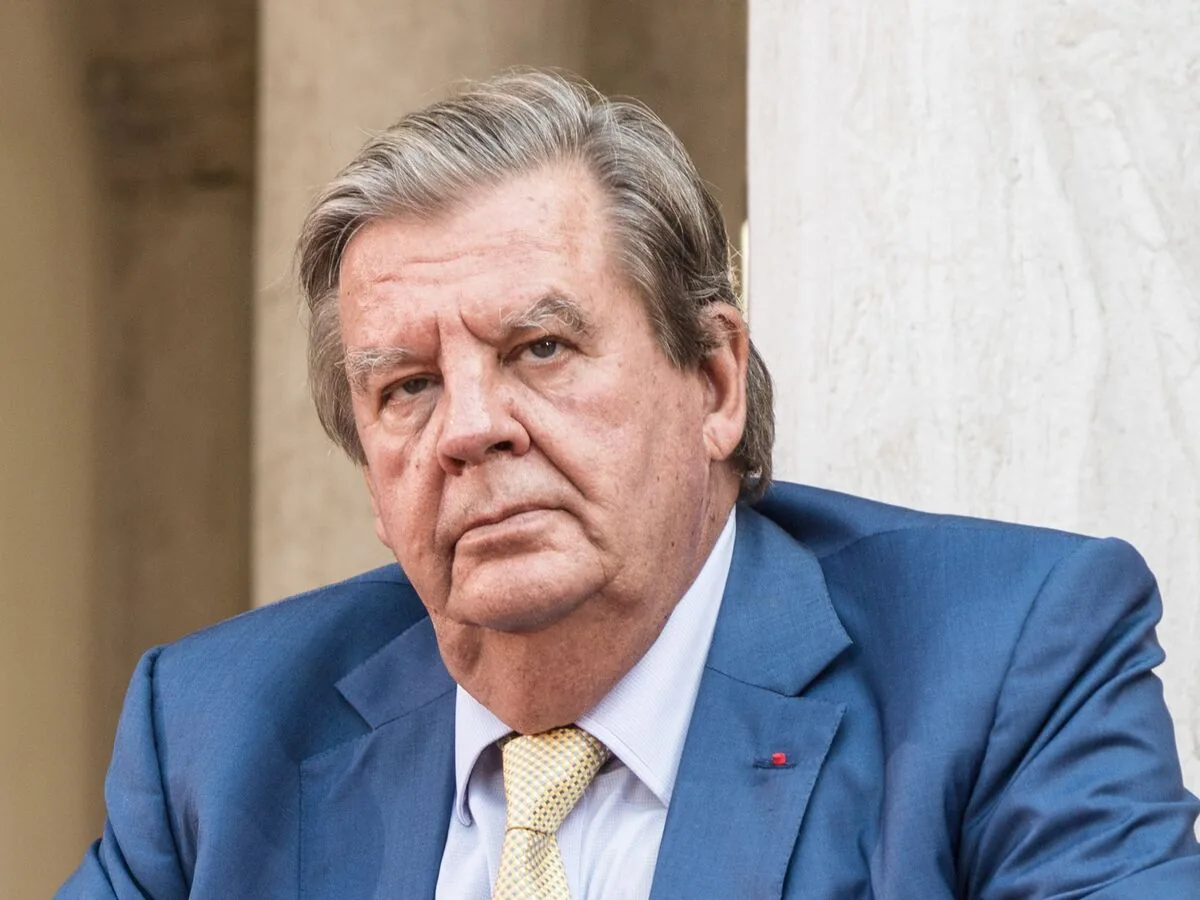
Who Is Johann Rupert?
Johann Peter Rupert (born 1 June 1950, Stellenbosch) is South Africa’s wealthiest resident and one of the most powerful figures in global luxury. He is the chairman of Compagnie Financière Richemont — the Geneva-based luxury conglomerate whose brands include Cartier, Van Cleef & Arpels, Jaeger-LeCoultre, IWC Schaffhausen, Piaget, Panerai, Montblanc, and Buccellati. He also chairs Remgro, a Johannesburg-listed investment holding company with stakes in more than 30 South African businesses across healthcare, financial services, food, and infrastructure.
Rupert’s story is one of the most carefully constructed wealth journeys in African business history. He is the eldest son of the late Dr Anton Rupert — the Afrikaner entrepreneur who built Rembrandt Group from a cigarette-rolling operation in a Stellenbosch garage into a multinational tobacco and industrial empire. Johann did not simply inherit his father’s company: he fundamentally transformed it. He separated Rembrandt’s European assets into Richemont, pivoted from tobacco to luxury goods, and built one of the world’s most respected brand portfolios. In 2025, the family’s collective net worth climbed to approximately $18.9 billion, after adding $5.3 billion in a single year.
“South Africa needs business people to take risks, create jobs and generate taxes. That is the best way to help the poor.”
Rupert is known for his candid and often controversial public statements on South African politics and governance. He has been a sharp critic of corruption, state capture, and economic mismanagement — particularly the Gupta family’s influence during the Zuma era. In May 2025, he was part of the South African delegation that accompanied President Cyril Ramaphosa to the White House to meet with US President Donald Trump, an effort to reset SA-US diplomatic relations. Beyond business, he is an avid conservationist, a lifelong golfer, and the founder of the Laureus Sport for Good Foundation.
Johann Rupert Net Worth in 2026: Updated Figures
As of May 2026, Johann Rupert’s personal net worth is estimated at approximately $15 billion USD by Forbes and Billionaires.Africa. The Bloomberg Billionaires Index tracked his wealth at around $17.9 billion as recently as May 3, 2026, though it noted a year-to-date decline of -$1.49 billion (-7.6%) as Richemont’s share price pulled back from the exceptional highs of 2025.
The Rupert family’s collective wealth — held through a network of trusts, Compagnie Financiere Rupert, and family vehicles — reached approximately $18.9 billion at the end of 2025 according to Bloomberg, after rising by $5.3 billion over the course of 2025 alone. That growth was driven by Richemont surging nearly 30%, Remgro rising 16%, and Reinet gaining 25% over the year.
Richemont (+30%), Remgro (+16%), and Reinet (+25%) all surged, lifting the family’s collective fortune to ~$18.9 billion by year-end.
Rupert’s wealth has grown substantially over the past five years, driven almost entirely by Richemont’s performance in global luxury markets. Here is how his personal net worth has tracked over recent years:
| Year | Estimated Net Worth (USD) | Notes |
|---|---|---|
| 2021 | ~$7.5 Billion | Luxury sector recovery post-COVID |
| 2022 | ~$10.4 Billion | Richemont strong; SA’s richest resident |
| 2023 | ~$10.7 Billion | Forbes 2023 list; became Africa’s richest (briefly) |
| 2024 | ~$14.3–16.3 Billion | Bloomberg / Forbes; surpassed Dangote as Africa’s richest |
| 2025 | ~$16.1–18.9 Billion | +$5.3B year; family wealth peaks at $18.9B |
| 2026 (current) | ~$15–17.9 Billion | Forbes ~$15B; Bloomberg ~$17.9B (May 3, 2026); YTD pullback of -7.6% |
The variance between Forbes and Bloomberg estimates is common for Rupert given the complexity of his holding structure across Swiss, Luxembourg and South African vehicles. Both sources confirm him as South Africa’s wealthiest resident and among the top 150 individuals globally.
For context, Rupert is wealthier than fellow SA billionaires Nicky Oppenheimer (~$10.6B) and Patrice Motsepe (~$4.3B peak), with the gap between him and the next tier of SA billionaires being substantial.
The Three-Pillar Empire
Johann Rupert’s empire is not a single company — it is an interlocking system of three major holding vehicles, each controlling a different dimension of a multi-generational wealth strategy. Understanding this structure is essential to understanding how he built, and continues to grow, one of the largest fortunes in Africa.
Pillar 1: Richemont — The Global Luxury Crown
Founded by Johann Rupert in 1988 when he separated Rembrandt’s European assets into a standalone entity, Richemont is today one of the world’s largest luxury goods companies — behind only LVMH and Kering. It is the world’s largest luxury watchmaker according to Bloomberg Intelligence. Its brand portfolio is a who’s who of the most coveted names in fine jewellery, horology, and fashion:
In jewellery: Cartier, Van Cleef & Arpels, and Buccellati. In watches: Jaeger-LeCoultre, IWC Schaffhausen, Piaget, Panerai, A. Lange & Söhne, and Vacheron Constantin. In fashion and accessories: Montblanc, Chloé, Alaïa, and Peter Millar. Richemont’s shares are listed on the SIX Swiss Exchange and also on the JSE. Its market capitalisation surged close to 30% in 2025, reaching approximately R2 trillion. The Rupert family holds all of Richemont’s non-traded Class B shares via Compagnie Financière Rupert, giving them 50% voting control despite their ~9.1% economic stake.
Pillar 2: Remgro — The South African Investment Engine
Remgro is the restructured form of the original Rembrandt Group, separated and JSE-listed in 2000. It is Johann Rupert’s primary South African investment vehicle and is chaired by him. Through the Rembrandt Trust, the Rupert family controls all of Remgro’s Class B shares, giving them voting majority. Remgro holds stakes in over 30 South African companies, with key assets including Mediclinic (private hospital group operating in SA, Switzerland and the Middle East), RCL Foods (food production), OUTsurance (insurance, shared with Patrice Motsepe’s ARC), and various infrastructure and telecom investments. In early 2026, Remgro sold a further R3.6 billion slice of FirstRand shares, continuing a six-year strategic exit from South Africa’s largest banking group. Total FirstRand proceeds collected now exceed R8 billion. Remgro’s market capitalisation stood at approximately R95 billion following a 16% gain in 2025.
Pillar 3: Reinet Investments — The Luxembourg Vault
Reinet is a Luxembourg-listed holding company originally created in 2009 to house Richemont’s stake in British American Tobacco. The Rupert family retains approximately 25% of Reinet. In a landmark strategic shift, the family exited BAT entirely in January 2025, selling its 43.3 million shares for more than £1.2 billion and ending a nearly 80-year association with the tobacco industry that began when Dr Anton Rupert rolled cigarettes in his Stellenbosch garage. Reinet has redeployed this capital into a portfolio of private equity investments across Europe, North America and Asia, including Pension Insurance Corporation (a UK financial services provider), Trilantic Partners, and Coatue Management. As of March 2026, Reinet’s net asset value was approximately R127.8 billion.
Leopard Creek Golf Club & Conservation
In 1995, Rupert purchased Leopard Creek Golf Club near Kruger National Park in partnership with professional golfer Gary Player. He designed the course himself — it consistently ranks among Africa’s top golf venues and hosts the Alfred Dunhill Championship annually. Conservation is central to his personal identity. He chairs the Peace Parks Foundation, which protects biodiversity across South Africa’s border regions, and is a lifelong trustee of the Southern African Nature Foundation.
From Stellenbosch to Global Luxury: Timeline
From a Stellenbosch garage to a R2 trillion luxury empire — here are the defining milestones in Johann Rupert’s hustle:
Annual Salary & Earnings
Johann Rupert’s income is structured very differently from most executives. He is known for donating his annual salary as Richemont chairman to charity — a gesture that underscores his view that his wealth comes from share ownership, not executive pay. His real income flows from dividends, capital distributions, and asset appreciation across his three pillars.
| Income Stream | Estimated Annual | Notes |
|---|---|---|
| Richemont Dividends (via Compagnie Financière Rupert) | ~$200–350 Million | Based on Richemont’s regular dividend payout policy; paid in CHF |
| Remgro Dividends (via Rembrandt Trust / Class B shares) | ~R1–1.5 Billion ZAR | Remgro headline earnings R5.175B in H1 FY2026 (up 38.8%) |
| Reinet Distributions (~25% family stake) | ~R500 Million–R1 Billion ZAR | Via Luxembourg-based Reinet; includes proceeds from BAT exit |
| Executive / Director Remuneration | Donated to charity | Rupert donates his annual salary; family trusts receive management fees |
| Asset Sales (e.g., FirstRand exit) | R3.6B+ in 2026 alone | Capital receipts from Remgro’s ongoing portfolio rebalancing |
It is important to understand that for someone of Rupert’s wealth level, the distinction between “income” and “net worth change” is somewhat artificial. A 1% move in Richemont’s share price changes his family’s wealth by hundreds of millions of dollars — dwarfing any conventional salary figure. His primary focus is on long-term capital allocation, not extracting annual cash income.
Philanthropy & Conservation
Johann Rupert’s philanthropic and conservation commitments are deeply embedded in his identity, much as they were for his father Anton. He chairs the Peace Parks Foundation, a conservation organisation that works to protect biodiversity and transfrontier conservation areas across southern Africa’s border regions. The foundation operates some of the largest conservation areas on the continent and has been instrumental in wildlife reintroduction efforts.
In 2000, Rupert co-founded the Laureus Sport for Good Foundation with the late Nelson Mandela. The foundation uses sport as a tool to help young people around the world overcome poverty, homelessness, violence, discrimination, and the effects of disease. To date, Laureus has partnered with more than 240 programmes in 40 countries. Rupert is also a former trustee of the Nelson Mandela Children’s Fund and serves on the Board of Trustees of the World Economic Forum.
“South Africa needs business people to take risks, create jobs and generate taxes. That is the best way to help the poor.”
Unlike many billionaires of comparable scale, Rupert maintains an exceptionally low personal profile. He rarely gives media interviews, avoids the celebrity circuit, and has been described by those who know him as intensely private. His public interventions tend to be reserved for matters of national importance — whether speaking out against state capture, attending a White House diplomatic meeting, or going public about a land dispute in Stellenbosch.
His wife Gaynor Rupert is a prominent conservationist in her own right. The couple lives in Stellenbosch and has three children. Following the death of his brother Anthonij in a 2001 car accident, Rupert took over the L’Ormarins wine estate and Anthonij Rupert Wines in his brother’s memory — one of the Western Cape’s most respected wine producers.